





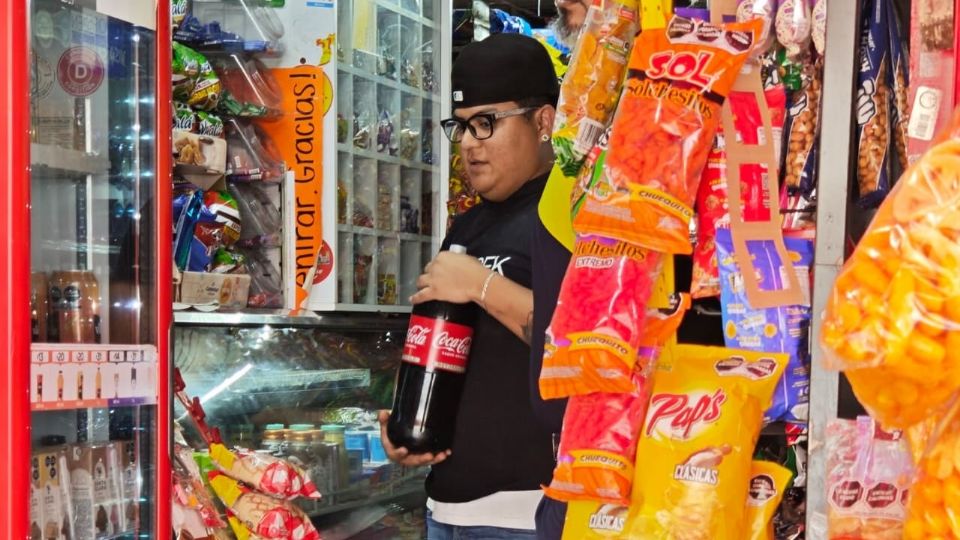

On a corner in Mexico City’s Doctores neighborhood, Sonia arranges bottles of juice and soda in more than 10 coolers in her store. She sells up to 500 bottles daily in different sizes and has spent two decades behind the counter. “Prices used to go up twice a year,” she says. “But people keep buying them anyway.”
Starting in 2026, Mexico will apply a new tax hike on sugary beverages and tobacco. The tax on sweetened drinks will jump from 1.64 pesos per liter to 3.08 pesos per liter—and for the first time, it will also apply to artificially sweetened drinks with no sugar. In the case of tobacco, the Special Tax on Production and Services (IEPS) will gradually increase by up to 200% over five years.
The federal government says this measure is about public health, pointing out that Mexicans consume an average of 166 liters of soda per person each year. Authorities blame sugary drinks for one in three new diabetes cases and one in seven cardiovascular diseases.
Te podría interesar
“A single 600-milliliter bottle contains the equivalent of 15 teaspoons of sugar. This amount, consumed daily, leads to cumulative health damage,” warned Health Secretary David Kershenobich in August.
But in neighborhood shops, the perception is quite different.
Te podría interesar
“It won’t work,” say local vendors
“This won’t change anything—people keep buying,” insists Sonia, who sells between 400 and 500 bottles daily, ranging from personal 600ml to 3-liter family-sized bottles. “Colas are the top sellers.”
Just a few blocks away, Manuel, a shopkeeper with six years of experience, agrees. “The customer bears the cost of the hike, not us,” he explains. “In the end, cravings and habits are stronger. People feel the hit at first, but then they get used to it.”
For him, the tax has more to do with revenue than health. “If it were really about health, they’d invest in hospitals or campaigns,” he says. “This is about collecting money.”
“It’s fast and convenient”: Between habit and necessity
While some vendors view soda consumption as an addiction, others see it as a quick fix for students, workers, and office employees with little time between jobs, school, and commuting.
That’s the case with José Luis, who runs a shop in the Obrera neighborhood. “People will keep buying because they don’t have anything else to drink,” he says.
He sells between 20 and 30 soda bottles a day. “With what people earn here, they can afford a soda. They usually bring lunch from home, and with 15 or 16 pesos left, they’ll buy a drink. If it takes you two hours to get to work, you won’t make hibiscus water. It’s easier and quicker to grab a Coke.”
In his store, he says, the increase won’t affect sales but will cut into profit margins. “If this were truly about health, they’d ban it,” he adds. “But they won’t—people need it, and the government needs the revenue.”
READ MORE: Soda tax: a good measure, but insufficient amid health crisis
Vendors caught between absorbing or passing on the cost
During a field visit by La Silla Rota to several stores in Mexico City, vendors confirmed they make between 1.5 and 3 pesos per bottle sold.
Even though it’s not their most profitable product, soda is among the best-selling items—regardless of price. “Even if people don’t have money, they somehow buy it. They complain, but they still buy,” says Juana, another shop owner.
However, for Araceli, who runs a food stand, the impact is already visible in her earnings.
“Sometimes we have to absorb those price hikes, so profits aren’t the same,” she says. “I sell it for 25 pesos, and it costs me 15. For now, I’ll keep covering the extra cost—but I’m already losing money.”
“I’m not quitting it”
The habit is so ingrained that not even the most health-conscious consumers imagine giving up soda. “It’ll be a bit harder to drink Coke,” admits Benjamín García, who drinks two 500ml bottles a day. “But I don’t think I’ll quit—it's a habit now.”
Even knowing about the price hike, he says he’s willing to pay up to 20 pesos per bottle. “It’s an addiction. Coke is part of me.”
Gonzalo, another regular soda drinker, says the hikes are excessive, but he still won’t quit. “What can you do? This is how I stay hydrated,” he says, holding a three-liter bottle.
VGB