





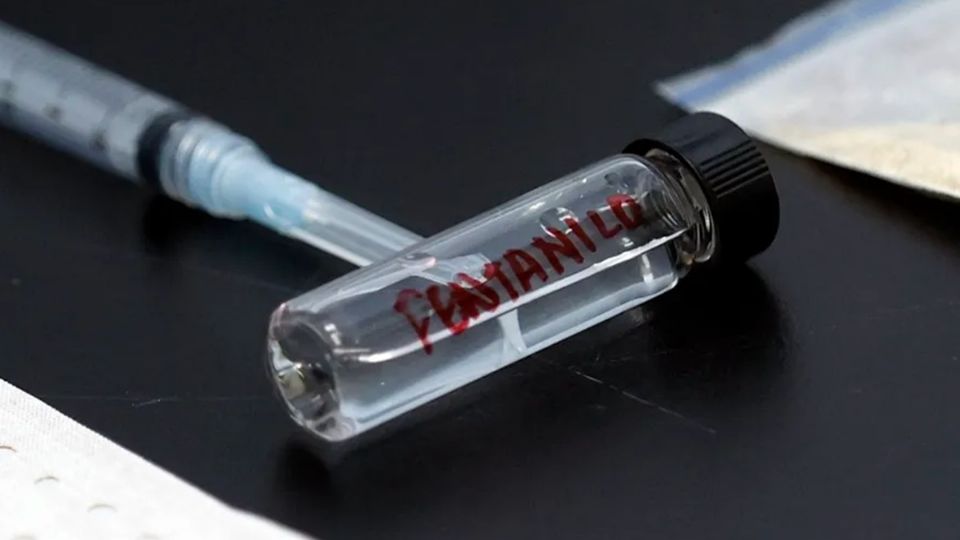

While the United States was grappling with one of the worst overdose crises in its history, agents with the Drug Enforcement Administration (DEA) allowed hundreds of thousands of fentanyl pills to circulate in New Mexico as part of investigations aimed at dismantling larger drug trafficking organizations, an Associated Press (AP) investigation revealed.
According to testimony from current and former agents, as well as official documents reviewed by AP, federal authorities monitored fentanyl shipments between 2023 and 2025 without immediately intercepting them, seeking to gather evidence that could support stronger cases against criminal networks.
The practice has generated concerns within the agency. David Howell, a DEA special agent who filed a whistleblower complaint, maintained that the strategy exposed the public to significant risks. According to his account, authorities chose to monitor the movement of narcotics rather than remove them from circulation, even when they had detailed knowledge of certain deliveries.
Te podría interesar
The debate comes at a particularly sensitive time for New Mexico, one of the states hardest hit by the fentanyl epidemic. While overdose deaths declined nationwide over the past year, government data show that New Mexico recorded a 21 percent increase.
ALSO READ: AMLO Concerned About U.S. Involvement in El Mayo Zambada Case: Sheinbaum
DEA Had Precise Knowledge of Shipments
The investigations reviewed by AP describe cases in which agents had detailed knowledge of the size and scope of fentanyl shipments. In one operation conducted in Albuquerque in June 2023, authorities documented a transaction involving approximately 74,000 pills, according to reports later supported by court records.
Howell stated that some of the monitored shipments were never recovered, making it impossible to determine their ultimate destination. Whistleblower advocacy organizations have called on Congress and oversight bodies within the Department of Justice to review the decisions made in these cases.
For its part, the DEA defended the legality of the investigations. In a statement provided to AP, the agency said its operational decisions were reasonable and consistent with existing federal guidelines. It also rejected claims that it deliberately allowed fentanyl to reach communities.
Authorities argue that the strategy was designed to dismantle entire criminal organizations rather than focus solely on isolated drug seizures. Alex Uballez, who served as U.S. Attorney for New Mexico from 2022 to 2025, argued that targeting larger criminal networks can have a more lasting impact on reducing drug trafficking.
One of the most significant cases concluded in May 2025 with the largest fentanyl seizure in DEA history. The operation resulted in the confiscation of more than three million pills and was described by then-Attorney General Pam Bondi as a historic blow against drug trafficking organizations.
Critics of the strategy, however, contend that authorities could have intervened months earlier and prevented a substantial portion of the narcotics from reaching the illegal market.
Protocols at the Center of the Debate
The controversy has also reignited debate over internal fentanyl-handling protocols. Department of Justice documents cited by AP show that rules adopted in 2017 required fentanyl to be seized as soon as possible, prioritizing public safety. However, an update implemented in 2024 granted investigators greater discretion in determining when to intervene.
The case gained additional attention after Howell approached federal whistleblower protection authorities. Initially, the U.S. Office of Special Counsel determined there was sufficient evidence to investigate potential misconduct. However, the Department of Justice later concluded that the decisions made by the DEA and federal prosecutors were reasonable and did not pose a specific threat to public health.
After publicly raising his concerns, Howell said he faced workplace repercussions within the agency, including restrictions on his duties and negative performance evaluations.
U.S.-Mexico Tensions Over Fentanyl
The anti-drug policy of Donald Trump's second administration has placed fentanyl trafficking at the center of tensions between the United States and Mexico. The U.S. administration has consistently argued that Mexican cartels play a central role in the production and distribution of the synthetic drug, which has fueled a public health crisis driven by overdose deaths across the United States.
From Washington's perspective, combating fentanyl has become a national security priority. The Trump administration has pressured Mexico to intensify efforts against criminal groups involved in drug trafficking and to increase seizures of chemical precursors, clandestine laboratories, and smuggling routes used to transport illicit substances into the United States.
U.S. officials maintain that a significant share of the fentanyl reaching the American market is produced by Mexican criminal organizations using chemicals imported from abroad. Under this framework, U.S. authorities have demanded stronger cooperation from the Mexican government and more visible results in the area of security.
In response to these pressures, President Claudia Sheinbaum has defended Mexico's independent strategy against organized crime, which is based on intelligence operations, institutional coordination, and addressing the social causes of violence. At the same time, her administration has sought to ensure that bilateral cooperation does not lead to direct intervention by U.S. authorities on Mexican soil.
The fentanyl issue has also revived debates over the shared responsibility of both countries. While the United States focuses its criticism on production and trafficking originating in Mexico, Mexican officials have argued that the problem also involves domestic drug consumption in the United States, the flow of firearms into Mexico, and the financial networks that enable criminal organizations to operate.
djh