





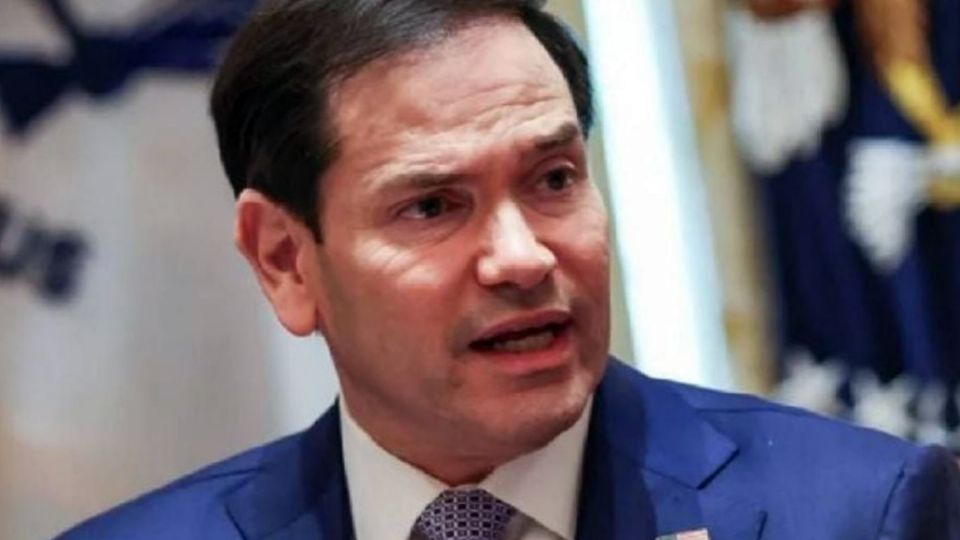

Marco Rubio said during a hearing that Mexican criminal organizations have increasingly incorporated drone technology into their operations and warned that the threat could eventually extend beyond Mexico.
“Mexican cartels are using drones against one another, and we have to imagine that at some point they could even use them against us, against our interests.”
The secretary added that drone-related threats are “a widespread problem around the world.”
Te podría interesar
“It is a global challenge, and it is happening every day around the world.”
Context: Pressure on Mexico Over Organized Crime
The administration of President Donald Trump has designated major Mexican criminal groups, including the Sinaloa Cartel and the Jalisco New Generation Cartel (CJNG), as terrorist organizations and has pressured the Mexican government to accept U.S. strikes against criminal groups operating on Mexican territory. Mexican President Claudia Sheinbaum has rejected that possibility, arguing that it would violate Mexico’s sovereignty.
ALSO READ: Mercedes Carballo, Mayor of Chilapa and Sister-in-Law of the Top “Ardillo” Leader
Sheinbaum recently called on U.S. Ambassador to Mexico Ronald Johnson to “respect Mexico’s internal affairs” after the diplomat urged both countries to keep political disputes separate from efforts to combat drug trafficking.
The exchange comes amid growing tensions between the two nations, which intensified after the United States accused ten Mexican officials—including Sinaloa Governor on leave Rubén Rocha Moya—of drug trafficking offenses and weapons-related crimes.
Hegseth’s Warnings Against Cartels
On May 27, U.S. Defense Secretary Pete Hegseth issued a warning against criminal organizations during a Cabinet meeting led by President Trump.
“We are going to war against the cartels,” Hegseth told members of the administration, amid Washington’s increasingly aggressive rhetoric on border security and anti-narcotics operations.
Earlier, on May 12, Hegseth called on the Mexican government to intensify military operations against drug cartels in order to prevent the United States from having to intervene directly in Mexican territory.
On April 29, Hegseth acknowledged progress by President Sheinbaum’s administration in strengthening border security but insisted that Mexico must “intensify its efforts even further” and do so quickly.
“We are pushing our Mexican counterparts to do more. They have made progress, but we need to see more, and soon,” he said at the time.
Defense Secretary Acknowledges Cooperation
Despite those demands, Hegseth also recognized on May 12, during testimony before the House Appropriations Committee, that there is currently “impressive and unprecedented cooperation” with Mexico’s Ministry of National Defense (Sedena) and Ministry of the Navy (Semar).
“We are calling on Defense and the Navy to continue working with us wherever they can and to do even more. That is the expectation of the U.S. government regarding the Mexican government: that it intensify its efforts so that we do not have to do it ourselves.”
His comments came after questions from Texas Democratic Congressman Henry Cuellar, who urged both Hegseth and Chairman of the Joint Chiefs of Staff Dan Caine to increase pressure on Mexico.
That same day, Drug Enforcement Administration (DEA) Administrator Terrance Cole warned Mexican politicians in the context of allegations involving Sinaloa Governor on leave Rubén Rocha Moya.
Speaking before the U.S. Senate, Cole said that collusion between drug traffickers and senior Mexican officials has existed for years, but that “suddenly, we are paying attention to it.”
Trump’s Latest Warning
On May 8, President Trump renewed his criticism of Mexico, insisting that drug cartels effectively govern parts of the country and warning that his administration would act “very soon” on land as well as at sea to combat drug trafficking.
During a Mother’s Day event at the White House, Trump said drug trafficking causes the deaths of hundreds of thousands of people each year in the United States and argued that his administration has already strengthened maritime operations against the flow of illegal narcotics.
Rubio Says Latin America Is “Full” of U.S. Allies
Rubio also said that Latin America is now “full” of countries aligned with Washington, describing the situation as a “major achievement,” while identifying Nicaragua, Cuba, Venezuela, Brazil, and Colombia as notable exceptions.
“Generally speaking, this is now a region full of allies of the United States, leaders aligned with the U.S., and a favorable orientation.”
The top U.S. diplomat nevertheless pointed to what he called “the exception of Nicaragua, Cuba and, obviously, Venezuela, which continues to present challenges, and of course Brazil, although it is in the middle of an electoral cycle, and to some extent the current government of Colombia, whose president has been problematic.”
Rubio argued that the region now has “a coalition of friendly countries” that have aligned to work on “difficult security issues,” referring to the Shield of the Americas, an initiative promoted by President Trump to combat drug trafficking and supported by right-leaning governments such as those of Argentina, Chile, Ecuador, and El Salvador.
The secretary described this as a “major achievement” and said he was satisfied with what he characterized as a reversal of two decades of U.S. “neglect” in the region, a period that he believes allowed China to expand its influence across Latin America.
Since Trump returned to office in January 2025, countries such as Bolivia, Honduras, and Chile have shifted politically to the right.
Likewise, far-right politician Abelardo de la Espriella received the highest vote total in the first round of Colombia’s presidential election last Sunday and is seeking to succeed current leftist President Gustavo Petro, whose relationship with Trump has been marked by tension.
Brazil is scheduled to hold elections next October, with incumbent progressive President Luiz Inácio Lula da Silva expected to face conservative Senator Flávio Bolsonaro, son of former President Jair Bolsonaro and a close ally of Trump.
In Venezuela, the United States says it continues to exercise oversight following the capture of former President Nicolás Maduro, while in Cuba, Trump has threatened to “take control” of the island in an effort to force political change.
djh