





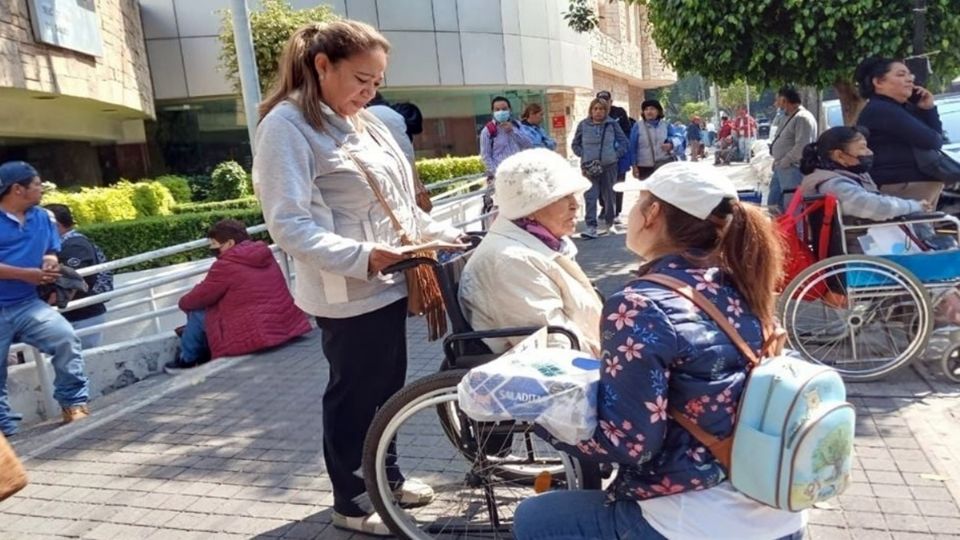

María del Carmen went two months without receiving her treatment at the National Cancer Institute (InCan) due to a lack of medicines.
Her brother José explained that from July to August, they received no information about when the medication would arrive.
“She was undergoing chemo—she had eight chemotherapy sessions—but in July they found tumors in her stomach,” he said.
After that, the doctor prescribed a new treatment including an additional drug; however, the pharmacy did not provide it.
Te podría interesar
“It’s just not possible; President Claudia Sheinbaum says there’s no medicine shortage in hospitals,” he insisted.
Protests at the InCan
On November 11, patients, relatives, and workers at the InCan blocked traffic on Tlalpan Avenue to denounce the shortage of medicines and supplies within the institution.
Following the protest, InCan officials offered a dialogue table with the Section 83 Union Committee to address the medicine and supply shortage, review items with possible quality issues, perform maintenance on equipment and hospital areas, monitor the release of funds by the Ministry of Finance, and replace deteriorated furniture (chairs and armchairs).
Discussions also included the delivery and quality of pending uniforms and correcting failures in the electronic medical record system.
However, healthcare workers emphasized that adequate equipment, supplies, and medicines are essential to provide timely care to oncology patients.
Amairani mentioned that for her mother, timely medicine delivery is crucial, as the InCan pharmacy has often told them that drugs are out of stock.
More budget, more patients
Context: In July, La Silla Rota interviewed Dr. Óscar Gerardo Arrieta Rodríguez, director of the InCan, who reported a sharp rise in the number of cancer patients.
The number of people treated at the Institute rose from 4,800 in 2020 to over 8,800 in 2024, increasing the demand for medical supplies, drugs, and equipment.
Dr. Arrieta noted that the Health Ministry, under which InCan operates, has shown willingness to collaborate, and there is coordination among public hospitals to address the medicine shortage crisis. “But the situation remains tense,” he admitted.
Just last week, lawmakers approved the 2026 Federal Expenditure Budget (PEF), which allocates 2.333 billion pesos to the InCan—an increase of 9% over last year, but still 32% below the amount approved in 2024.
The cuts directly affect families like Carmen’s, who are forced to seek medical tests elsewhere.
“I think it was in November last year... the doctor told me to schedule a blood test, but when I got there, they told me it wouldn’t be available until July this year,” she recalled.
Medicine supply
“The system hasn’t collapsed; it’s actually trying to move forward,” said Health Secretary David Kershenobich Stalnikowitz during his appearance before the Health Committee of the Chamber of Deputies.
He stated that in recent months, 96% of medicine supply nationwide had been achieved, and that government purchases had resulted in savings of more than 105 billion pesos.
djh