





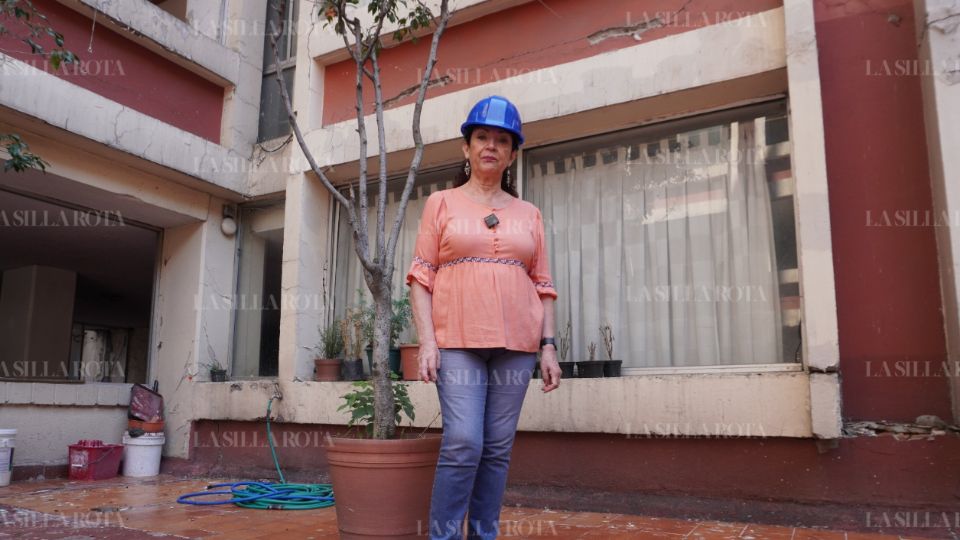

For more than eight years, the families living in the Aguascalientes 12 condominium, located in Roma Sur's neighboorhood, have been displaced from their homes after the building sustained structural damage during the 2017 earthquake. It was deemed unsafe and marked for demolition, yet six residents are calling for rehabilitation instead. While the dispute drags on, the building continues to deteriorate.
María de los Ángeles Moreno, a resident and spokesperson for Aguascalientes 12, explains that after the evacuation, some neighbors moved to other states, and 15 have passed away before being able to return home.
“I moved here in ‘94, and since 2017 I haven’t been able to stay here,” she recalls as she climbs the building’s stairs.
Te podría interesar
She emphasizes that on four separate occasions, authorities have declared the building to be at high risk of collapse. Most recently, on July 3, 2025, the Eighth District Court ruled that the building must be evacuated so it can be demolished and rebuilt.
Ángeles stresses that if the building collapses, it won’t just affect the six families currently living there, but also the church next door, the Benito Juárez school—which has one of the highest student populations in the area—residents of the surrounding area, and anyone passing by the street.
The earthquake that doomed a building
When the earthquake struck on September 17, 2017, Ángeles was inside her apartment on the seventh floor and ran to the rooftop.
While she was up there, a loud crash was heard—it was the gas tank falling. When she went back down, she saw several neighbors kicking their doors open as the building's structure began to fail.
After the incident, it was determined that the building posed a high risk of collapse. To reduce further danger, residents were forced to remove furniture, windows, and doors.
“This building is at high risk. Entering is at your own risk, but people here don’t get it. Just look at the place, look at the condition of the apartments,” says Ángeles as she walks through the ground floor.
The endless dream of returning home
The complex consists of two towers with nine floors each and includes parking space. Even from outside, the damage is evident: broken windows, crumbling walls, and cracked support columns.
Nearly a decade after the quake, neighbors are exhausted by the ongoing situation. While they receive a monthly financial aid of 5,300 pesos (approx. $300 USD), that amount is insufficient to recover what they’ve lost.
“In fact, when an earthquake hits, people tell us: ‘oh, hopefully it falls now.’ No—we don’t want it to collapse, we don’t want a tragedy,” she says.
The residents have taken their case to former Mexico City Head of Government and now President Claudia Sheinbaum, César Cravioto (former Reconstruction Commissioner and current Government Secretary of Mexico City), and current city leader Clara Brugada.
However, the process has stalled due to various issues such as the COVID-19 pandemic and the closure of Mexico City courts.
Cravioto once told them: “We had everything in place to demolish it, but there are injunctions—some families don’t want it demolished.”
Currently, they have held dialogue tables with Housing Secretary Inti Muñoz, but the proposed solutions have not been satisfactory.
Rehabilitate or demolish?
Ángeles explains that the government has presented four possible solutions for Aguascalientes 12:
- Rehabilitation, which most residents reject outright.
- Construction of 60-square-meter units, despite most original apartments being 80 to 100 square meters.
- Reconstruction with a mortgage, meaning the 70 units would be financed individually.
- Construction with 30% additional units, which would allow the government to sell extra apartments and use the profits for the reconstruction.
She says the last option seems the most viable, but they are still waiting for the evacuation order to be enforced and for authorities to take action to move forward with this plan.