





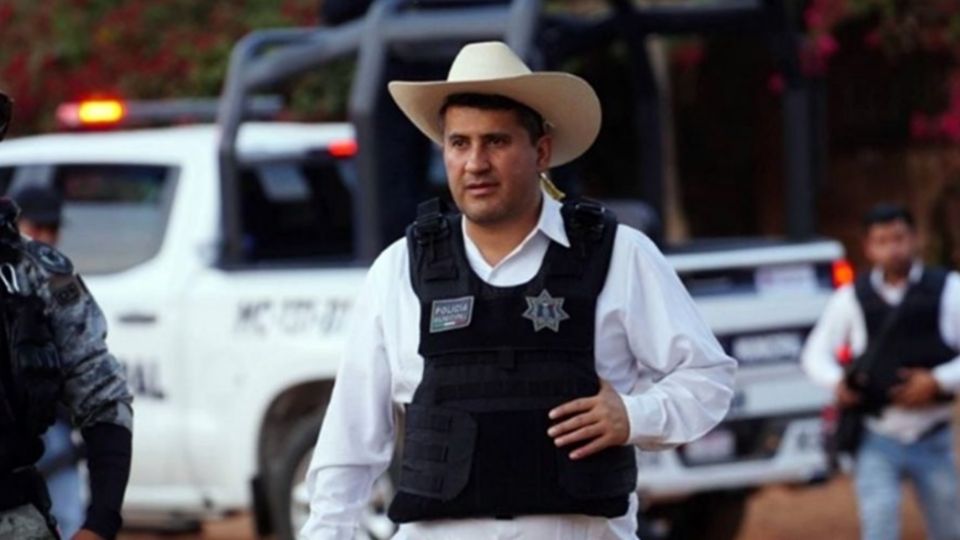

Mexico's Secretary of Security and Citizen Protection, Omar García Harfuch, announced Thursday the arrest of Ramón Ángel Álvarez Ayala, alias "R1," who has been identified as the alleged mastermind behind the murder of former Uruapan Mayor Carlos Manzo.
The operation involved personnel from the Secretariat of Security and Citizen Protection (SSPC) and the Mexican Army's Special Forces, acting on strategic intelligence provided by the National Intelligence Center (CNI). Authorities also coordinated closely with the Michoacán State Attorney General's Office and the state's Public Security Secretariat.
Intelligence agencies identify "R1" as the top leader of Los Rs, one of the most violent criminal cells linked to the Jalisco New Generation Cartel (CJNG). The group operates in the Michoacán municipalities of Apatzingán, Uruapan, and Morelia, while also maintaining a presence in the neighboring state of Jalisco.
Te podría interesar
According to official reports, the group's criminal activities—including extortion, homicide, and drug trafficking—have directly affected producers, business owners, and families throughout the region.
ALSO READ: ICE Deports David Vargas Rivera to Mexico, Allegedly Linked to the Santa Rosa de Lima Cartel
Progress in the Case and Security Strategy
With the arrest of Ramón Ángel Álvarez Ayala, authorities have now detained 31 individuals in connection with the murder of former Mayor Carlos Manzo.
Officials described the arrest as a significant step forward under the Michoacán Plan for Peace and Justice, part of President Claudia Sheinbaum's national security strategy aimed at weakening organized crime structures and combating extortion through intelligence-driven operations and coordination among federal, state, and local authorities.
The Álvarez Ayala Clan
Background: "R1" and his brother Rafael Álvarez Ayala, alias "El R2," are members of a family that has held strategic positions within the CJNG for more than a decade. Their rise within the organization was cemented after "El Mencho" assigned them the mission of expanding into territories already controlled by local criminal groups, triggering a series of high-profile armed confrontations.
In Michoacán, Ramón Álvarez Ayala led offensives against criminal organizations including Los Caballeros Templarios, Los Zetas, and, more recently, a coalition of criminal cells known as Cárteles Unidos, which continues to challenge the CJNG for territorial control. His role became so prominent that, by 2012, Mexico's Secretariat of National Defense identified him as the cartel's second-in-command.
"R1's" First Arrest
That same year, the Mexican Army arrested Ramón and Rafael in simultaneous operations carried out in Jalisco. Court proceedings kept "R1" in prison for at least 10 years, until a panel of judges ordered his release on Nov. 19, 2022. He was freed from Federal Social Readaptation Center (CEFERESO) No. 11 in Sonora.
Since then, intelligence reports indicate that he resumed command of operational criminal cells in Michoacán.
Rafael Álvarez Ayala, known as "El R2," was identified as a key lieutenant responsible for supplying vehicles, coordinating operations, and overseeing his brother's personal security. At the time of his 2012 arrest, he reportedly told authorities that he received direct orders from "El Mencho," according to a report by the Secretariat of National Defense.
CJNG's Operational Strength in Michoacán
A third brother, Jesús Santiago Álvarez Ayala, also appeared in federal investigations after serving a sentence for vehicle theft, although he never reached the same level of criminal prominence as "R1" and "R2."
The family's influence grew significantly following the arrest of Nicolás Balcázar López, alias "El Bronco," when "El Mencho" reportedly placed "R1" in charge of Guadalajara and northern Jalisco.
In Michoacán, two armed factions are reported to operate under "R1's" command: Fuerzas Especiales R1 and Los Cannabis. According to authorities, these groups frequently distribute videos, photographs, and narcocorridos on social media and streaming platforms as part of the cartel's strategy to project its narrative and strengthen its presence.
djh