





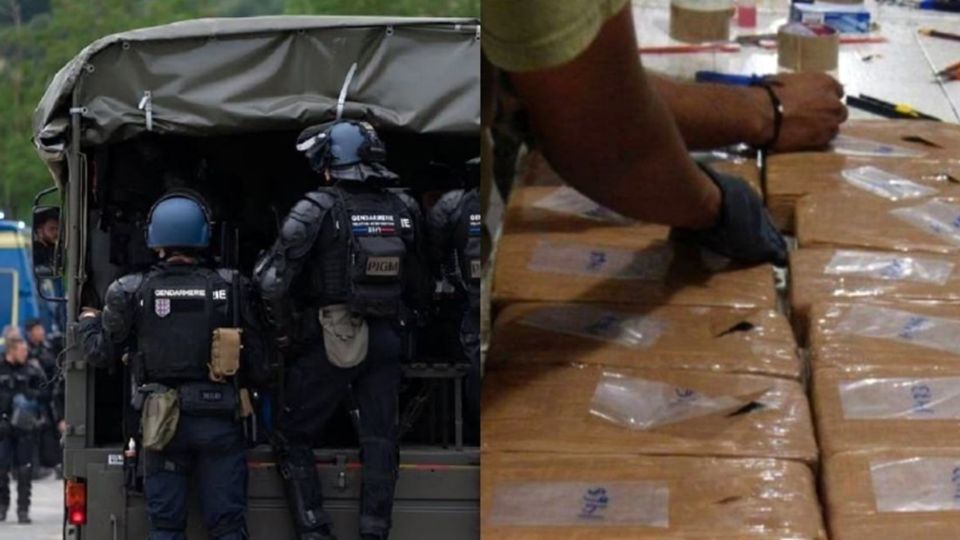

French newspaper Le Figaro has used the term “Mexicanization” to describe the growing reach and escalating violence associated with drug trafficking across France.
The expression, which has gained traction in the country's political and media discourse, refers to a scenario marked by extreme insecurity, territorial control by criminal groups, the recruitment of minors, and brutal methods of violence that mirror the tactics of Mexican and other Latin American drug cartels operating in French neighborhoods.
Speaking before the French Senate on November 1, 2024, following an attack on a five-year-old child in Rennes linked to drug trafficking, Interior Minister Bruno Retailleau said France was “on the path to Mexicanization” because of the rise in extreme violence and clashes between rival drug trafficking groups.
Te podría interesar
"Soit il y a une mobilisation générale, soit il y a la mexicanisation du pays." (“Either there is a nationwide mobilization, or the country will undergo Mexicanization”.) Retailleau has also referred to the “Mexicanization of the Hexagon,” warning about the expansion of criminal structures similar to drug cartels.
On July 21, Retailleau again used the term “Mexicanization” in a social media post in response to the increase in violence across France.
ALSO READ: "El Mayo" Zambada Sentenced to Life in Prison in U.S.
“The ‘Mexicanization’ of France is underway. We must equip ourselves with every possible means to fight drug traffickers,” he wrote.
More recently, Le Figaro columnists and researchers such as Yves Thréard and Éric Delbecque have repeatedly questioned whether France is heading toward “Mexicanization,” warning of what they describe as the state's apparent loss of control in certain neighborhoods.
“Mexicanization”, a recurring term in France
The term “Mexicanization” was first used by Pope Francis in 2015 during a meeting with an Argentine lawmaker, when he expressed hope that Argentina still had time to avoid “Mexicanization”.
Since then, the expression has gained prominence in the international press and, particularly, in statements by French politicians beginning in late 2024 and early 2025 as a warning about rising drug-related violence and the perceived threat of a state weakened by criminal organizations.
The term was popularized by figures such as Interior Minister Bruno Retailleau and other politicians, including Didier Migaud and Étienne Blanc, who have used it to describe the risk of France experiencing a form of violence they characterize as “Mexican”: territorial, entrenched, and marked by impunity.
“Mexicanization” has become a recurring expression in France—and increasingly elsewhere in Europe—to describe a scenario of extreme insecurity characterized by broad daylight killings, systematic extortion, territorial control by criminal organizations, alleged collusion by public officials, structural impunity, and a gradual weakening of the rule of law.
Mexico and France strengthen cooperation against organized crime
The use of the term prompted a diplomatic response from Mexico. The controversy intensified when the French interior minister publicly used the expression to warn about the risk of local criminal organizations undermining the rule of law.
In response, the Mexican Embassy in Paris lodged formal complaints, describing the term as “unfortunate” and “stigmatizing” toward the Mexican people, while emphasizing Mexico's institutional efforts to combat organized crime.
In November 2025, Mexico and France agreed to strengthen cooperation against organized crime, according to Mexican Navy Secretary Adm. Raymundo Pedro Morales Ángeles.
Following French President Emmanuel Macron's visit to Mexico on November 7, 2025, during which he met with President Claudia Sheinbaum Pardo at the National Palace, both governments announced a bilateral understanding to confront transnational criminal organizations.
Adm. Morales also met with Jean-Noël Barrot, France's minister responsible for the economy, finance, industrial and digital sovereignty, to sign a letter of intent aimed at expanding bilateral cooperation and joint capabilities in maritime security.
“This trip will mark a turning point in our fight against drug trafficking. Latin American countries are on the front lines in combating this scourge and the criminal groups that have turned it into a global industry. That is why we want to strengthen our partnerships with these countries,” Barrot said in a message posted on social media.
What does “Mexicanization” mean in France?
According to analyses published in the French press, the term encompasses several specific trends:
Gang warfare: Violent territorial disputes carried out in broad daylight in cities such as Marseille, Grenoble, and Paris, involving shootings and levels of brutality described as unprecedented in Western Europe.
Recruitment of young hitmen: Local groups such as DZ Mafia reportedly use digital platforms including TikTok and Snapchat to recruit teenagers with no prior ties to organized crime and pay them to carry out killings.
Narco culture: Some emerging French criminal groups have adopted symbols associated with Mexican cartels, including the Jalisco New Generation Cartel (CJNG), and have even released heavily armed video statements modeled after those produced by cartel organizations to challenge authorities.
djh