





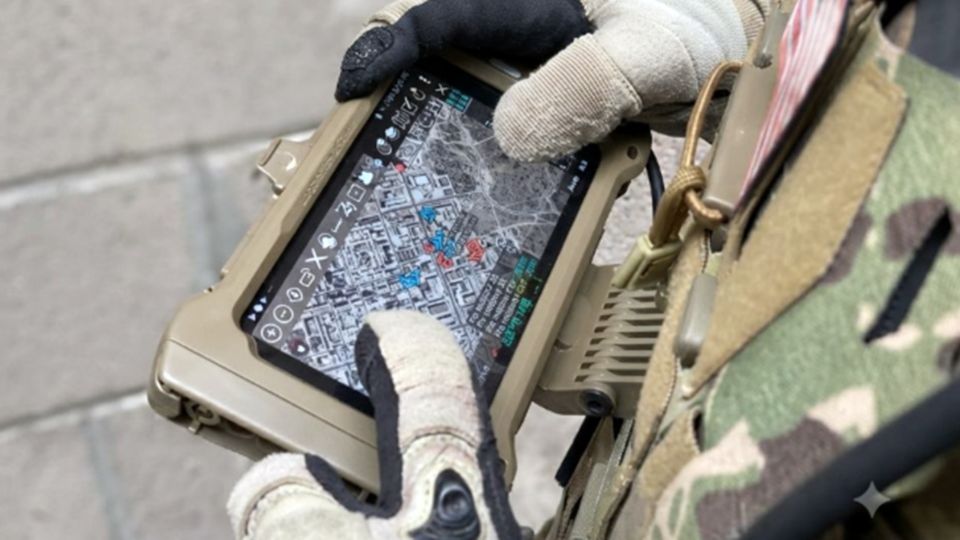

According to the newspaper, criminal organizations in Mexico infiltrated the mobile devices of U.S. military personnel stationed at the border and later sent them threats.
A U.S. congressional official quoted by The New York Times said the soldiers started receiving intimidating messages after their cell phones had been compromised.
The report states that the incident occurred after the death of Nemesio Oseguera Cervantes, better known as "El Mencho," leader of the Jalisco New Generation Cartel (CJNG). He was reportedly killed in February during an operation in Tapalpa, Jalisco, carried out by Mexican armed forces with support from the Central Intelligence Agency (CIA).
Te podría interesar
According to congressional officials cited by The New York Times, criminal activity along the border intensified following the death of the CJNG leader, along with threats targeting U.S. service members.
Against that backdrop, on Thursday, June 25, U.S. Homeland Security Secretary Markwayne Mullin told the House of Representatives that nine criminal organizations are currently operating in the border region.
ALSO READ: CJNG and Sinaloa Cartel Are DEA’s Top Priority, Says Director Terry Cole
"The cartels are always evolving and remain a threat. They're constantly looking for vulnerabilities to facilitate human smuggling and narcotics trafficking across our border," he said.
Background
On Thursday, June 25, U.S. Homeland Security Secretary Markwayne Mullin told the U.S. House of Representatives that nine criminal organizations currently have a presence along the border.
"The cartels are always changing and remain a threat. New cartels emerge that control different territories and operational hubs. They are constantly looking for vulnerabilities to move human trafficking and drug smuggling across our border."
Border Operation Tops $500 Million
The military operation along the U.S.-Mexico border has now cost approximately $525 million, according to Pentagon figures. The Department of Defense continues to deploy about 9,000 troops across roughly 3,200 kilometers (about 2,000 miles) of border to help curb drug trafficking, illegal migration, and smuggling.
According to the report, the military presence has forced criminal organizations to shift part of their operations into remote mountainous areas to avoid detection. Soldiers have also received direct threats as a result of these enforcement efforts.
Operation "Ardent Vanguard"
In May, Maj. Gen. Curtis D. Taylor of the Army's 1st Armored Division assumed command of the mission known as "Ardent Vanguard."
Although troops are equipped with counter-drone systems, Taylor acknowledged they still lack some of the technology needed for border patrol operations.
The border has also become a testing ground for emerging technologies, including counter-drone devices, remotely operated watercraft, and advanced sensor systems. Meanwhile, Maj. Gen. David W. Gardner, commander of the 101st Airborne Division, said the Army has been disabling drones operated by criminal organizations in an effort to identify smuggling routes.
On June 2, U.S. Secretary of State Marco Rubio warned during a Senate hearing that Mexican cartels could eventually use drones against U.S. targets.
"Mexican cartels are already using drones against one another, and we have to assume that at some point they could use them against us and against our interests," Rubio said.
The secretary added that the issue is "a widespread problem around the world. It is a global challenge, and it is happening every day across the globe."
Training and Operational Readiness
Some sectors of the U.S. government have questioned whether active-duty troops should be conducting border patrol missions instead of training for potential operations in Eastern Europe, the Middle East, or the Indo-Pacific.
Military leaders, however, argue that the deployment provides valuable real-world operational experience. According to The New York Times, the soldiers "are using many of their skills—including route planning, mission rehearsals, patrols, and surveillance flights—in real-world operations against smuggling rings and Mexican drug cartels, rather than simply practicing on base or during training exercises."
Civilian Detentions Along the Border
The Department of Defense has established five operational sectors in California, Arizona, New Mexico, and Texas that function as military zones. Within these areas, troops have been granted expanded authority to assist in intercepting individuals entering restricted zones.
According to The New York Times, "migrants who enter these strips are considered trespassers and may be temporarily detained by U.S. soldiers until Border Patrol agents arrive."
As of the publication of the report, the Army said it had detained 116 individuals, who were later transferred to U.S. immigration authorities.
djh