





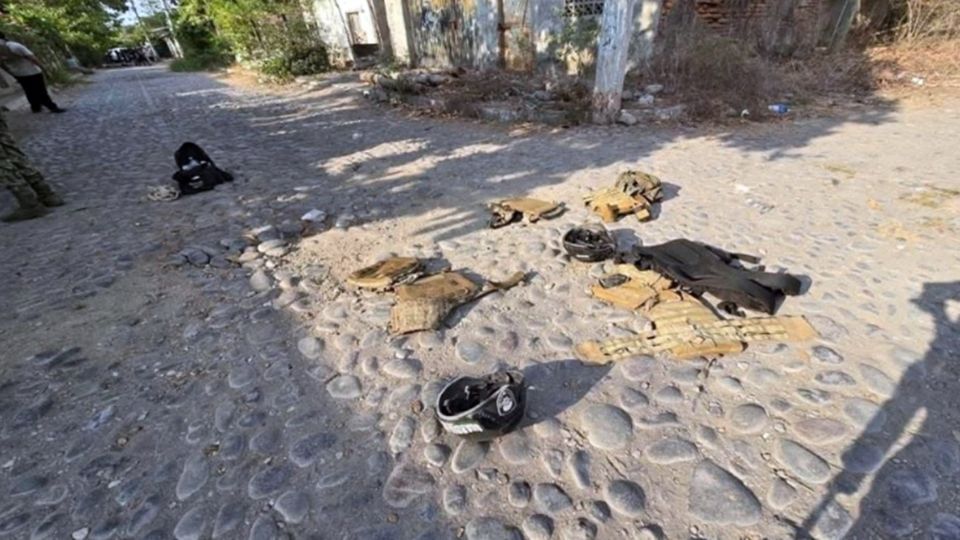

The killing of two relatives of Mario Delgado, head of Mexico’s Public Education Ministry (SEP), on January 31 in Colima set off alarms throughout Morena and the self-described Fourth Transformation movement.
Felipe Delgado, the secretary’s brother, confirmed that his aunt Eugenia and his cousin, who shared the same name, were killed by armed men who broke into their home.
The double homicide highlighted a grim reality: despite being the least populated state in the country, Colima has the highest number of homicides per 100,000 inhabitants. During the first four months of 2026, the number of murders (208) already surpassed the total recorded during the same period in 2025 (182).
Te podría interesar
Colima ended 2025 as the deadliest state in Mexico, recording 622 victims of intentional homicide and a rate of 81.1 murders per 100,000 inhabitants, a figure that placed it in international rankings as one of the world’s most violent regions, according to the Citizens’ Council for Public Security and Criminal Justice.
Colima is Mexico’s least populated state, with 791,391 residents according to the 2020 census. Its homicide rate per 100,000 inhabitants is four times the national average of 17.5 cases. Experts consider this indicator the most accurate reflection of how crime affects daily life within a community.
Figures from Mexico’s National Public Security System Executive Secretariat show declines in intentional homicides and other high-impact crimes, but specialists warn that violence in Colima has not disappeared — it has simply been reshaped under a model of criminal territorial control.
ALSO READ: The Luxuries and Irregularities of Jorge Cano, Rubén Rocha Moya’s Son-in-Law
The so-called “narco peace,” imposed mainly by the Cártel Jalisco Nueva Generación (CJNG) in strategic areas such as Manzanillo and the state capital, has reduced open clashes but not criminal dominance, public fear, or the operational capacity of organized crime groups.
What Is Happening?
The state continues to rank among the most violent in Mexico because of the longstanding conflict between criminal organizations and the strategic importance of the Port of Manzanillo for international drug trafficking.
The Port of Manzanillo is considered one of the most important logistical hubs on Mexico’s Pacific coast and one of the main entry points for goods arriving from Asia. Federal authorities have identified the arrival of chemical precursors used to manufacture synthetic drugs — particularly fentanyl — as well as cocaine shipments from South America.
The organization México Evalúa ranked Colima among the country’s most violent states during the 2015–2025 period. In its study Violence in Mexico 2025–2025: Data Analysis and Proposals for Peace, the organization documented that the state recorded a rate of 81.1 intentional homicides per 100,000 inhabitants.
“Intentional homicide is the main indicator of lethal violence,” the organization states in the report, adding that such crimes are usually linked to organized crime, territorial disputes, and institutional weakness.
México Evalúa concluded that Colima has been experiencing a homicide crisis since 2015. That year, murders increased by 219%. Although periods of decline followed — including a 16% reduction in 2018 and a 26% drop in 2024 — the state continues to lead national rankings in lethal violence.
Colima frequently records higher homicide rates than states with larger absolute numbers of murders due to its small population and the intensity of criminal violence concentrated in specific areas.
Researchers also found that several municipalities in Colima stand out for their levels of violence and risk. The state capital, also called Colima, recorded the country’s highest municipal homicide rate in 2025, with 83.8 murders per 100,000 inhabitants.
Other violent municipalities included Armería and Villa de Álvarez, with homicide rates of 72.7 and 56 per 100,000 inhabitants, respectively. Analysts described these municipalities as scenarios of “extreme violence with partial containment,” warning that a nationwide drop in murders does not necessarily mean local pacification, since major hotspots of violence remain active and, in some cases, are worsening.
Context: Violence in Tecomán
The events recorded on May 25 and 26, 2026, in Tecomán and other municipalities reinforced the perception that declining homicide statistics do not necessarily reflect a reduction in the operational capacity of criminal groups.
During those hours, authorities reported armed confrontations, highway blockades, and vehicle burnings across several parts of Colima, including areas near the border with Michoacán.
According to state authorities, the violence began after an attack against investigative police officers from the State Attorney General’s Office who were responding to a 911 emergency report.
The attack left two officers injured and triggered a security operation that led to further violence, including road blockades and the placement of burning vehicles to obstruct traffic.
As part of the unrest, authorities suspended in-person classes in municipalities such as Tecomán, Armería, Manzanillo, and Ixtlahuacán, moving schools to virtual learning.
The decision reflected the continuing impact of insecurity on daily life, one of the defining characteristics specialists associate with territories dominated by criminal organizations.
The episode came just days after another major security operation. On May 14, 2026, state authorities announced the deaths of two suspected CJNG members during a confrontation in the city of Colima.
Among those killed was a target considered high-priority by security agencies and known by the alias “Huesos,” whom officials identified as a member of the criminal organization.
In this context, the May incidents once again placed Colima at the center of national attention. Although statistics show relative declines in some crimes, the recent blockades, armed attacks, and security operations reveal that the struggle for territorial control and strategic routes in the state remains active.
A “Narco Peace”
Security analyst David Saucedo said the decline in murders in Colima is partly the result of a territorial reconfiguration carried out by the CJNG, which has consolidated its presence in strategic areas of the state.
According to the specialist, the decrease can be explained by a “narco peace”: control imposed by a single criminal organization that reduces open warfare without eliminating violent dynamics.
“It is not a perfect, complete, and total peace, because there are still pockets of resistance to the group’s dominance,” he said.
For Javier Oliva Posada, Colima is one of the key territories for drug trafficking because of its geographic location and maritime connectivity, factors that have intensified criminal organizations’ interest in controlling the state, especially the Port of Manzanillo.
The national security expert warns that Colima’s position along commercial and trafficking routes to the United States turned it into a strategic point for groups involved in drug and illicit goods trafficking.
Indiscriminate Violence
Colima is one of Mexico’s smallest states, but the peace it enjoyed until the middle of the last decade has become a distant memory.
Violence has even reached top political figures. Silverio Cavazos, governor from 2005 to 2009, was assassinated months after leaving office. While walking his dog, he was attacked by armed men near his home before his bodyguard could protect him.
Last March, Hilario “N,” known as “El Chiwas,” was arrested in Parral. Authorities identified him as the alleged killer of Cavazos, although the motives were never made public.
Another former governor, also from the PRI party, survived an attack. In 2015, Fernando Moreno Peña, who governed the state from 1997 to 2003, was shot while eating at a restaurant in the capital alongside another former university rector.
Violence has also reached members of the judiciary. In 2020, a federal judge and his wife were murdered inside their home.
Then-Interior Secretary Olga Sánchez Cordero stated that Judge Uriel Villegas had been handling organized crime cases and was killed “for doing his job.”
In 2023, Jaime “N,” nicknamed “El Alacrán,” a CJNG hitman linked to the judge’s murder, was shot dead in Colima.
High-Impact Violence
The persistence of violence became evident through several high-profile crimes at the beginning of 2026.
One of the cases that shocked the state the most was the murder of María Eugenia Geña Delgado and Sheila Amezcua Delgado, aunt and cousin of Education Secretary Mario Delgado Carrillo.
“Deep shock, outrage, and sadness over the events that occurred this morning in Colima, where my aunt Eugenia Delgado and my cousin Sheila were brutally murdered in their home,” the official wrote on social media.
Also drawing attention were the murder of Cuauhtémoc Livestock Association leader Samuel González Rodríguez on March 3 and the killing of six people inside a bakery in the state capital on September 2 of last year.
Residents Feel Unsafe
Public perception also shows no signs of calm. Data from Mexico’s National Urban Public Security Survey (ENSU) reveal that 77.2% of residents in the city of Colima and 71.4% of residents in Manzanillo feel unsafe. Both figures are above the national average and reflect that declining homicide numbers have not translated into a sense of peace.
In this context, specialists argue that the reduction in murders does not represent structural pacification, but rather a criminal reorganization aimed at securing control over the Port of Manzanillo, its expansion projects, and strategic areas of the state capital.
José Saucedo Romero, a public security and prison system expert living in Colima, said statistical declines have not changed public perceptions of insecurity.
“Although intentional homicides have decreased, we still have the highest rate nationwide, so there is still much work to be done,” he said.
At the national level, the federal government maintains that the reduction in murders is the result of arrests of violent offenders and the weakening of criminal organizations. However, experts consulted warned that lower homicide numbers do not necessarily indicate lasting improvements in security conditions.
Specialists and residents interviewed agreed that violence has altered everyday life in the state: fewer nighttime activities, school closures during shootings or clashes, and a growing perception of danger.
“The perception is terrible. People no longer go out like they used to; they stay home more,” said José Saucedo Romero.
“When they hear about shootings or clashes, they immediately stay indoors. I work as a teacher, and I see parents refusing to send their children to school,” he explained.
Other people interviewed by La Silla Rota, originally from Mexico City but now living in Colima, said that although they still consider the state attractive because of its weather and quality of life, insecurity has persisted for years.
They recounted that after the reported death of Nemesio Oseguera Cervantes on February 22, they chose not to leave their homes for several days out of fear of violent reprisals, even though related incidents had occurred in Jalisco.
Manzanillo: A Blessing and a Curse
“In Colima there is a blessing that is also a curse: the Port of Manzanillo,” José Saucedo Romero said.
The port is one of the state’s main economic engines and handles thousands of containers carrying legal goods. However, specialists warn that it has also become one of the main routes for the entry of chemical precursors used to produce synthetic drugs, as well as cocaine shipments.
David Saucedo explained that the port has long been one of the strategic territories disputed between the CJNG and the Cártel de Sinaloa. Manzanillo’s logistical importance has turned it into a key node within international drug trafficking routes.
He added that the CJNG’s growing strength in the area coincides with port expansion projects, increasing the group’s interest in maintaining territorial control.
Within this context, he explained, criminal organizations seek to benefit indirectly from public infrastructure projects through contracts involving materials, services, or labor.
A Historically Disputed Territory
For public security specialist Víctor Sánchez, the violence crisis in Colima centers primarily on the Port of Manzanillo, the municipality where much of the criminal conflict is concentrated.
The analyst agreed that the port’s logistical and commercial relevance turned it into a strategic point for organized crime groups, directly affecting homicide levels and perceptions of insecurity.
He argued that although Colima has recorded some of the country’s highest homicide rates for years, its security crisis has not received the same national attention as states such as Guanajuato or Baja California. The state’s small population, he said, makes its total number of murders appear lower, even though the proportional impact is more severe.
Historically, Colima has been a battleground for competing criminal groups.
David Saucedo recalled that years ago, rumors surrounding the death of “El Mencho” triggered internal fractures within the CJNG that led to the emergence of splinter groups such as the so-called Independent Cartel of Colima, led by Jesús Bernabé Brizuela, who was arrested in 2022.
Today, he explained, the CJNG’s territorial dominance in the state capital and Manzanillo has reduced open confrontations with rival organizations, including remnants linked to the Sinaloa Cartel.
Colima, an Extreme Case
For years, Colima has remained among the Mexican states hardest hit by lethal violence.
In 2024, the state recorded 690 homicide deaths, including 100 women victims, according to data from Mexico’s National Institute of Statistics and Geography (INEGI).
That year, the state ranked among the country’s most affected both in absolute numbers and in proportional terms. While heart disease remains the leading cause of death nationwide, homicides in Colima accounted for an unusually high share of overall mortality.
By contrast, the state ranked ninth nationwide in deaths related to diabetes mellitus and fourth in deaths caused by malignant tumors.
For specialists, Colima represents one of the most extreme cases in Mexico: a small state with a strategic port for international drug trafficking, where lower homicide figures coexist with high levels of fear, criminal territorial control, and persistent institutional fragility.
djh