




Donald Trump’s interest in Greenland, an autonomous territory of Denmark, escalated again in January after a series of statements in which the U.S. president said his country needs the island to guarantee its national security. Trump argued that Washington must take control of Greenland “by good means or by bad,” warning that otherwise Russia or China could expand their influence in the Arctic.
The U.S. president has directly linked Greenland to the strategic defense of the United States, noting that the island is key to projects such as the so-called “Golden Dome,” a global-reach missile defense system. He has also insisted that U.S. control of the territory would make NATO more effective and formidable—an argument that has triggered strong reactions among European allies.
Context: Although the idea of acquiring Greenland is not new— the United States attempted it in 1868 and again in 1946— the current geopolitical context, shaped by the war in Ukraine and growing cooperation between Moscow and Beijing, has positioned the Arctic as a central strategic region for Washington.
Te podría interesar
Denmark’s response: military deployment and a White House meeting
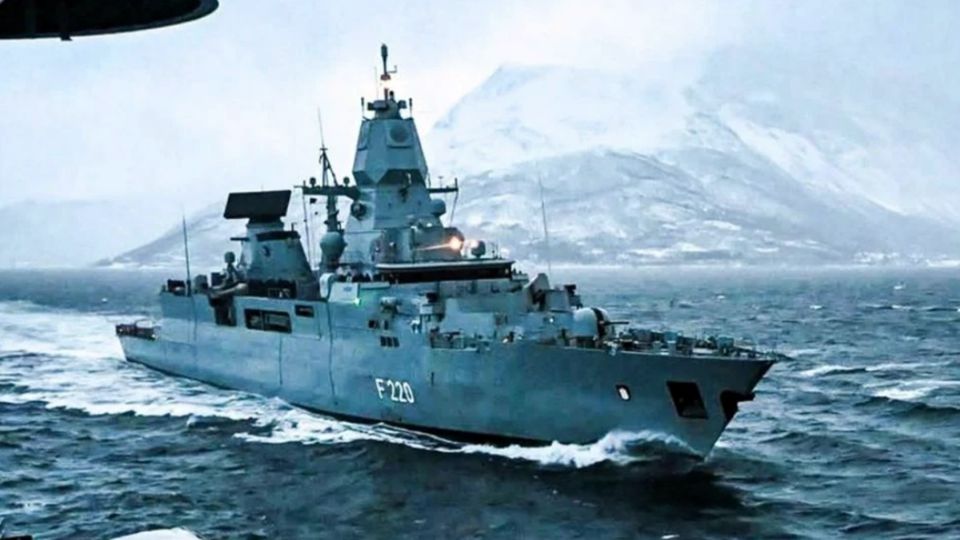
Trump’s statements prompted an immediate response from Denmark, which rejected any possibility of annexation and announced a reinforcement of its military presence in Greenland, in coordination with NATO allies. The Danish Ministry of Defense said it will increase maneuvers and the deployment of aircraft, ships, and troops to improve operational capacity in the Arctic and strengthen the Atlantic Alliance’s footprint.
Copenhagen also recalled that over the past year it allocated around 42 billion Danish kroner (about 6 billion euros) to directly strengthen Greenland’s defense, including more ships, satellites, and drones.
Against this backdrop, a key meeting is being held this Wednesday at the White House between Denmark’s foreign minister, Lars Løkke Rasmussen; Greenland’s foreign minister, Vivian Motzfeldt; and U.S. Secretary of State Marco Rubio. The goal is to address Washington’s aspirations regarding the island and explore possible avenues for cooperation.
Among the measures announced by the Danish Ministry of Defense are:
The deployment of an advance command, additional ships, aircraft, and troops.
The conduct of exercises to protect essential facilities and receive allied forces.
Although Copenhagen and Greenland’s autonomous government reject threats of annexation, they have shown openness to increasing cooperation with Washington. Meanwhile, the local population is experiencing anxiety at the prospect of becoming the center of a conflict between global powers.
Trump’s latest position on U.S. and NATO security
In his most recent message, Trump reiterated that “anything short of Greenland in U.S. hands is unacceptable,” asserting that NATO can only be truly deterrent with the “vast” military power of the United States. According to the president, without Washington’s leadership the Atlantic Alliance would lose effectiveness against threats such as Russia and China.
Trump has also emphasized the imbalance of capabilities in the Arctic, noting that Russia has dozens of icebreakers, while the United States has a very limited fleet. In response, Washington approved the purchase of 11 icebreakers from Finland, valued at $6.1 billion, to expand its power projection in the region.
France and Spain criticize U.S. action against a NATO ally
From Europe, France and Spain have taken firm stances in response to U.S. threats. French President Emmanuel Macron warned that any violation of Greenland’s sovereignty would have “unprecedented chain consequences,” given that it is a territory of a European country and ally.
As a political signal, Paris announced the opening of a consulate in Greenland starting in February, as a gesture of support for Denmark and rejection of what it described as Trump’s “blackmail.”
For her part, Spain’s defense minister, Margarita Robles, said it is “hardly acceptable” for a NATO member country to act against the territorial integrity of another ally. Robles urged the European Union to assume “decisive” leadership and not remain a secondary actor amid escalating tensions in the Arctic.
djh