





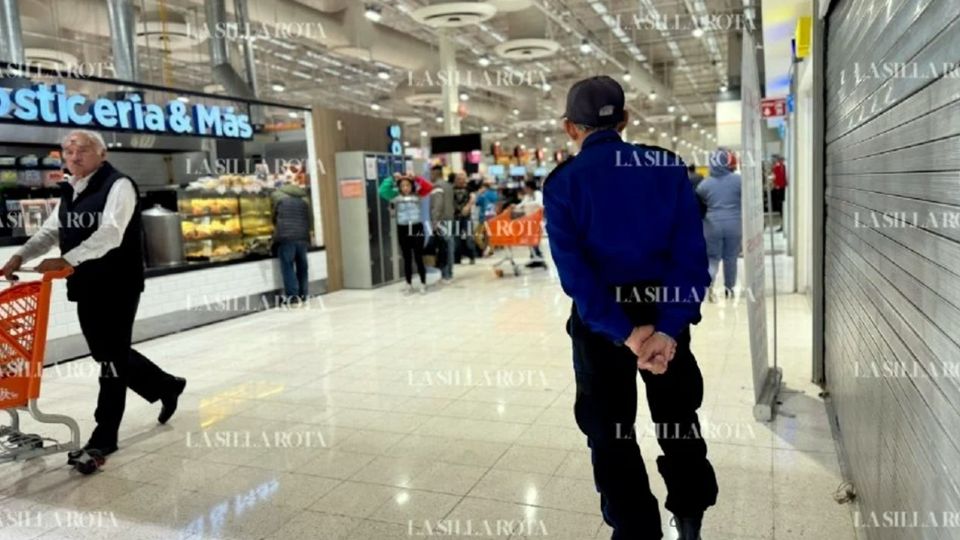

Enrique discreetly shifts his weight from one foot to the other. He slightly lifts his heels, bends his knees, and sways his body. He has been standing for more than 10 hours without sitting, guarding the entrance of a self-service store in northern Mexico City. This is despite the fact that, since December 15, the so-called “Chair Law” has been fully enforceable nationwide.
Under the reform to the Federal Labor Law, Enrique should have access to a chair with a backrest and regulated rest periods. However, his reality is different. “They’ve told us they haven’t modified the regulations, and that’s why we don’t have chairs. Just like that,” the 59-year-old guard tells La Silla Rota.
The Ministry of Labor and Social Welfare (STPS) established that, after a 180-day transition period, all companies in the commercial, industrial, and service sectors must have adapted their facilities and internal regulations. The rule prohibits forcing workers to remain standing throughout their entire shift. But in the private security sector, the legal provision has collided with organizational culture and client demands.
Te podría interesar
The gap between the law and the job post
Enrique Gómez entered the security field two years ago after retiring and failing to find work in the real estate sector because of his age. Today, he works 72 hours a week—12 hours a day, Monday through Saturday—for a monthly salary of 10,000 pesos.
“It’s very exhausting. On top of that, we wear boots that aren’t flexible, so it’s even more tiring. I get home completely worn out,” he says.
Despite the law’s intent to prevent circulatory and muscular injuries, not a single chair has been provided at his workplace.
On the other side of the city, the story is no different. Roberto, a former police officer with diabetes who works as a guard in a shopping mall, is counting the days.
He says he will quit on December 20, after receiving his year-end bonus. This is because he earns only 4,200 pesos a month, has no benefits or Social Security, and certainly no chair to rest on, despite the new law.
“There are coworkers who’ve been here for two years and don’t have Social Security. They don’t say anything out of fear. When there are meetings and someone raises their hand to talk about their rights, they get attacked,” he says.
“It’s brutal, honestly. I know this chair thing is formal and legal, but here it’s not applied. You’re here out of necessity, but sometimes you feel like taking legal action so they pay the rights they’re supposed to pay like any company, because most of them don’t,” he complains.
Guards use buckets due to the lack of chairs
During a tour conducted by La Silla Rota, it was confirmed that few security workers have a chair in shopping malls and department stores.
As a result, workers resort to informal solutions. Some use upside-down paint buckets or lean against the edges of enclosed structures when supervisors are not present.
“It’s hard to comply because of client demands”
Omar Romero Gutiérrez, a private security entrepreneur and representative of the firm DAROMI, admits that compliance with the law does not depend exclusively on security agencies, but also on the conditions imposed by external clients.
“There are services where it doesn’t look good for the guard’s image to have a chair. Even though the law mandates it, they don’t give the green light to carry it out,” he explains in an interview.
“Many times, store managers say they can sit, but that they should hide the stool behind the display window or take it to the stockroom. By the time the guard goes for the seat and comes back, minutes of surveillance are lost and the client complains,” the businessman says.
Even when the provider company tries to supply high stools or folding chairs, clients often reject them, considering that they disrupt the establishment’s aesthetics.
Added to this resistance is a technical lack of knowledge about the law. Despite STPS statements, Romero Gutiérrez says he is unclear about the legal consequences. “The statement said that as of that date they could sit, but specific sanctions weren’t detailed. I don’t know what the financial penalty would be,” he admits.
A sector of 866,000 workers
Noncompliance with the Chair Law affects one of the country’s largest labor forces. According to figures from the Ministry of Economy, Mexico has 866,000 people working as guards and security personnel in establishments.
The average profile is a 44.8-year-old man who works 57.8 hours a week, exceeding the legal limit of 48 hours.
The sector’s average monthly salary stands at 6,650 pesos, although there is a marked gender gap: men earn an average of 6,880 pesos, while women—who make up 17.4% of the workforce—earn only 5,560 pesos.
The states with the highest concentration of these workers are the State of Mexico (137,000 people), Mexico City (75,400), and Jalisco (58,800).
Likewise, the National Census of State Public Security (CNSPE) indicates that by 2024, Mexico had 6,362 private security companies, an increase of 2.01% compared to the previous year.
Despite this corporate growth, for workers like Enrique and Roberto, labor formality has yet to translate into the basic right to have a chair during their workday.
djh