





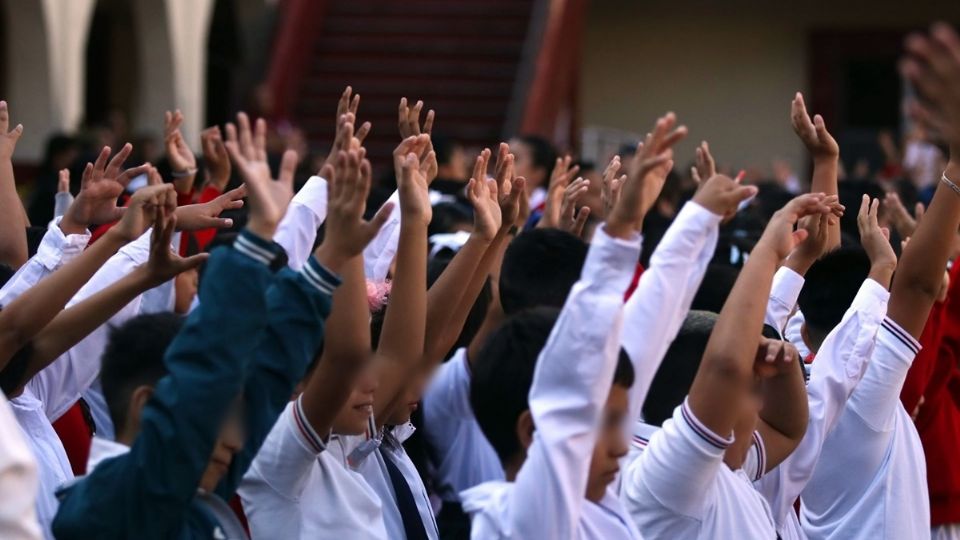

A health evaluation performed on 7,653,000 primary school students nationwide — roughly 60% of the 11 million enrolled at that level — found that half have nutritional issues that may lead to overweight or obesity, while 4.5 million have cavities and three million need eyeglasses, according to data from the SEP.
Mario Delgado, Secretary of Education, reported that nearly 60 percent of the country’s 11 million public primary school children have been evaluated so far. The assessment, part of the Healthy Life program, is expected to be completed before the end of the 2025–2026 school year.
According to the SEP’s own figures, the percentage of children who have actually received care is low: of the 3,826,000 students identified with overweight or obesity, only 275,000 have received attention at a clinic or health center; and of the three million who need glasses, only 100,000 have been given a pair.
Te podría interesar
The results show that six out of ten primary school students have oral health problems. Delgado noted that among the children evaluated, only seven percent (275,000) have received treatment.
“During the school visit they receive fluoride and an oral exam, but it’s important that follow-up care is provided and that children are taken in for treatment (…) We’ve found that the vast majority of children have never been to a dentist,” the SEP secretary said.
Follow-up: the biggest challenge for Healthy Life
Following publication of the assessment, La Silla Rota spoke with José Noé Rizo Amézquita, a Public Health and Social Security researcher, who said that ensuring follow-up for each child evaluated in the program will be one of the biggest challenges.
The expert noted that the strategy will help reduce the strain on the national health system by treating the population at early ages.
“It’s important that we provide care as soon as these nutritional, oral, or vision issues are diagnosed, and that we are able to develop the necessary treatment.”
He added that it must be evaluated whether each state has the required health personnel to provide care to every patient or, if not, implement a follow-up strategy.
Rizo Amézquita explained that the lack of attention to oral health often stems from parents’ or guardians’ perception that certain health issues are not urgent.
Factors such as parents’ work obligations make it difficult for them to take children to appointments to get eyeglasses or have cavities checked.
Context: Nurses from IMSS, IMSS Bienestar, the federal Health Ministry, state DIF systems, and staff from the SEP and state Education Departments have participated in visits to primary schools. During these visits, children are weighed and measured, their oral cavities are examined, and a visual acuity test is performed. Each student receives a digital health file that parents or guardians can download.
The goal is to screen 11.2 million students in these three areas.
States still pending evaluation
So far, 60 percent of students nationwide have been assessed, and authorities expect to complete the diagnostic process this year in Chiapas, Morelos, Puebla, Tlaxcala, and Veracruz. In Aguascalientes, Mexico City, Coahuila, State of Mexico, Guanajuato, Hidalgo, Nayarit, Nuevo León, Querétaro, and San Luis Potosí, progress exceeds 80%.
The states with the lowest progress — under 60% — are Michoacán, Guerrero, Oaxaca, and Quintana Roo.
The researcher explained that the lag is due to the significant challenges these states face.
“Reaching these remaining three and a half million children is the hardest part. These are communities with large Indigenous populations that face deep inequality and social gaps,” he emphasized.
Due to this situation, he said, it is necessary to prioritize and focus the efforts of field teams to address these high-risk diagnostic findings.
djh