





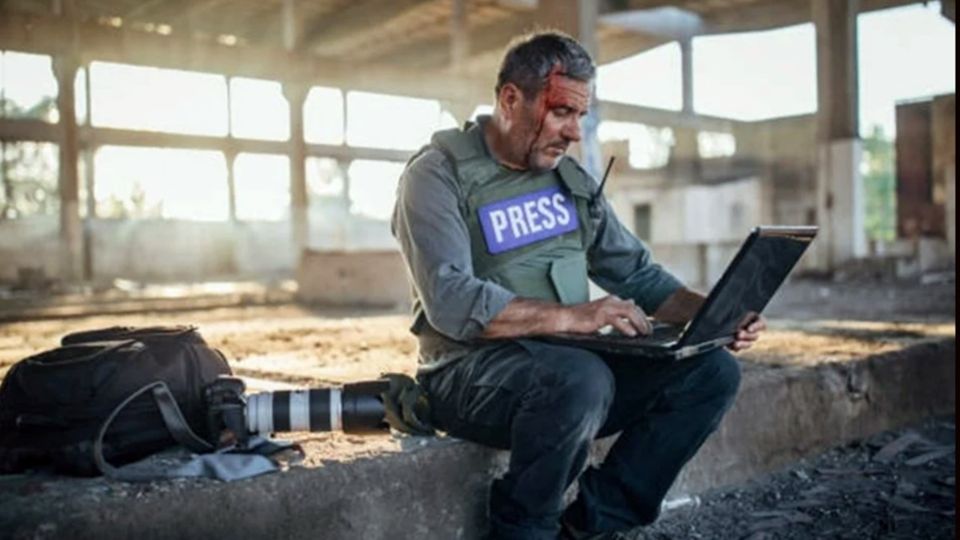

The year 2025 is closing as one of the deadliest for the global press: 67 journalists were killed, according to the annual report by Reporters Without Borders (RSF). Gaza has solidified its place as the most lethal territory, followed by Mexico and Ukraine, in a landscape marked by wars, organized crime, and increasingly repressive governments.
In this context, Gaza has once again become the epicenter of violence against the press.
According to the RSF report, at least 29 journalists were killed in the Strip over the past year, all of them while carrying out their professional duties and at the hands of the Israeli Army, which the organization labels as “the worst enemy of journalists.”
Since the Hamas attack on October 7, 2023, nearly 220 media workers have been killed in Gaza—a number without precedent in the recent history of journalism.
Te podría interesar
Overall, nearly half of the 67 journalists killed worldwide (43%) died in Gaza between December 2024 and December 2025.
Mexico: criminal violence and a deadly record for the press
In Mexico, nine journalists were killed in 2025, the deadliest year for the profession in the country in at least three years.
RSF denounces a troubling trend: the “Mexicanization” of Latin America, where organized crime is expanding, weakening institutions, and increasing impunity.
Latin America accounts for 24% of journalist killings; if the Caribbean — especially Haiti — is included, the figure rises to 26%.
One year into President Claudia Sheinbaum’s term, RSF criticizes the Mexican government’s “failure” to protect journalists despite its stated commitments.
Ukraine and Sudan: correspondents trapped in ongoing wars
In Ukraine, where the war continues nearly three years after the Russian invasion, three journalists were killed in drone attacks over the past year. RSF accuses the Russian army of continuing to target both domestic and international media professionals in violation of humanitarian norms.
Sudan has also emerged as a particularly lethal war zone, marked by clashes between rival military forces and the complete absence of safety for the press.
Mass imprisonments: China, Myanmar, and Russia lead
As of December 1, 2025, 503 journalists were imprisoned in 47 countries, a figure that exposes the intensification of repressive policies and state control over information.
China: 121 journalists detained
Myanmar: 47
Russia: 48, including 26 foreign Ukrainian journalists
Israel, for its part, holds 20 Palestinian journalists in detention, according to RSF.
Kidnappings, disappearances, and the shadow of global censorship
Twenty journalists remain kidnapped worldwide, all of them men. The countries with the most cases in 2025 were:
Yemen: 9 kidnappings, seven of them by Houthi rebels
Syria: dozens of reporters captured years ago remain missing
Mali: one of the most dangerous hotspots for the press in the Sahel
The number of missing journalists has risen to 135, including nine women. Some have been missing for more than 30 years. Countries with the highest number of disappearances:
Syria: 37
Mexico: 28
Iraq: 12
RSF documented severe restrictions on press freedom during protests in countries as diverse as Nepal, Serbia, Indonesia, France, Ecuador, and Madagascar.
In Ecuador, at least 55 journalists have been attacked since September 2025, both by law enforcement and armed civilians. One of the most serious incidents was the shooting that left Edison Muenala, journalist and producer at Apak TV, critically injured.
Repression has forced dozens of journalists to flee countries such as Russia, Afghanistan, Belarus, and El Salvador, where President Nayib Bukele’s policies have triggered a “wave of repression” against independent media, according to RSF.
The biggest predators of press freedom in 2025
The annual “predators” list published in the fall identifies the main actors responsible for systematic attacks against press freedom. Leading the ranking:
Vladimir Putin (Russia)
Israeli armed forces
Jalisco New Generation Cartel (Mexico)
Myanmar’s military government
Taliban supreme leader (Afghanistan)
This list reflects the combination of authoritarianism, organized crime, and armed conflict—the main global threats to the press.
djh