





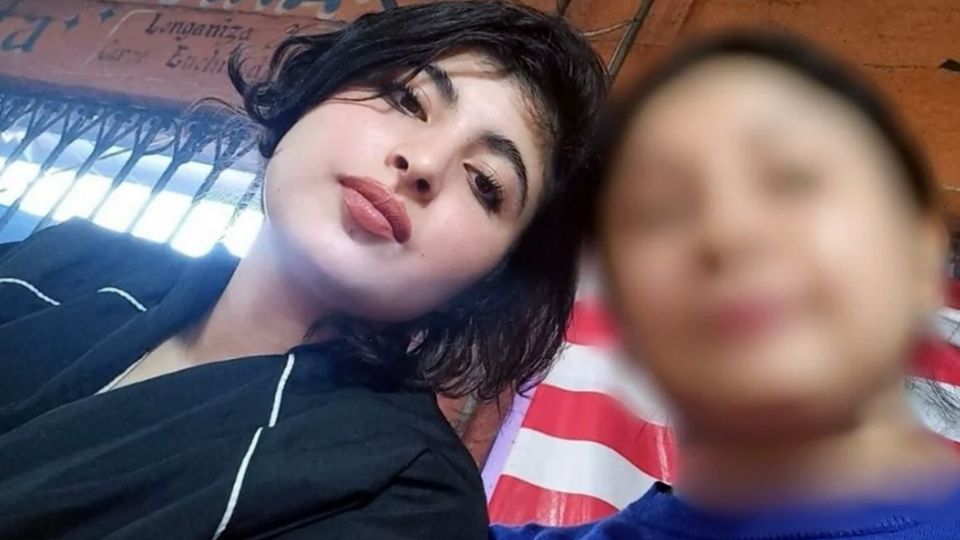

Morelos — Janeth Díaz arrived in Jiutepec, Morelos, searching for refuge. She had escaped Bogotá, Colombia, in 2021 after years of domestic violence inflicted by the father of her three daughters. She thought that crossing the border would allow her to close that dark chapter. However, on October 30 of this year, her life was shattered once again: her middle daughter, Sharick Staicy Bonilla Díaz, disappeared without a trace. Since then, Janeth has been reliving the same fear she thought she had left behind.
Janeth’s story began years ago in the Colombian capital. “I decided to leave the country to protect myself and my daughters,” she recalls in an interview with La Silla Rota. The immigrant arrived alone in Morelos after the father of her daughters refused to sign the permit allowing her to take them out of Colombia.
They were “years of lawyers, paperwork, and savings spent” until she was finally able to bring Geraldine, the youngest, first — and just seven months ago, Sharick, who is now missing. While Janeth was in Mexico, the girls’ biological father tried to force her to return: “He took the girls away from my parents several times. It was very dangerous. I didn’t feel safe.”
Te podría interesar
Janeth was able to reunite with both daughters little by little over a span of four years. Geraldine, the youngest, arrived first; Sharick, the middle daughter, came in April. “She didn’t know I was going to pick her up; it was a surprise,” she says. In Morelos, mother and daughters were seeking what violence had denied them in Colombia: “We just wanted a peaceful life.”
“She just went to the park… and didn’t come back”
Sharick left home at 12:30 that Thursday. She wore old sneakers and a sweatshirt. She told her mother Janeth she was just going to the park, “half a block away,” and would return in time for lunch. Janeth allowed her to go. “She had been there several times; she hadn’t had any problems,” she recalls in the interview. But at two in the afternoon, when lunch was ready, the teenager didn’t return.
After sending messages and calling her repeatedly, Janeth walked to the park, then to the library, and searched the nearby streets. “That’s when I realized she wasn’t there. And that’s when my anguish began,” she says, her voice breaking.
At 2:30 p.m., while still searching, she decided to send a photo to her daughter on WhatsApp, just so Sharick would see it and respond. She did. “Mom, delete that photo, you’re ‘boleteándome,’” the teenager replied. In Colombian slang, “boletear” means to expose someone.
Minutes later, Sharick sent another message: “Mom, I’m in Cuautla.” Janeth couldn’t understand how or why her daughter had left Jiutepec without telling her. The text messages were disconnected, strange. Sharick talked about “getting herself a room,” about wanting to live alone. Janeth tried to calm her: “I told her: if you want to go live somewhere else, I’ll go with you, I won’t force you to stay with me. But she said she wanted to think things over.”
At 11:30 p.m., after Janeth asked her for a photo and a voice note, communication stopped. The phone went silent. The next day, Friday the 31st, at 8:10 a.m., Sharick sent a brief greeting. It was the last message the mother recognizes as truly hers.
Chats, a deleted photo, and an audio that brings no relief
That same night, almost at midnight, Sharick’s phone sent another message… but it was no longer her. The message went to Geraldine, the younger sister. “We thought it was her, but no — it was someone else.”
The person texting asked for money: first 500 pesos “for the bus,” then 1,500. They said Sharick was in Nuevo Laredo, Tamaulipas, and that they were “helping her.” They sent a photo that Janeth managed to see: “It was her, but the person deleted it immediately.” A short audio also came through: “Hi, Geral, I’m fine.” Then, silence.
Janeth and her new partner searched for Sharick on their own in hotels, red-light zones, drug-selling areas, dangerous neighborhoods. They even consulted a hacker and a psychic. Nothing. “It’s desperate. Not knowing if she ate, if she slept well, if someone is hurting her,” Janeth says.
The prosecutor's office assumed it was just teenage rebellion
When she went to the Morelos Prosecutor’s Office, Janeth brought everything: her daughter’s phone number, locations, social media, contacts, and testimonies. The initial response was frustrating. “They assumed it was a tantrum, that she had run off with a boyfriend,” the mother laments, pointing out that her daughter had arrived just seven months earlier and “didn’t know the area, didn’t know how to get around on her own, didn’t have friends.”
Recently, the Morelos Prosecutor’s Office showed Janeth the geolocation records from her daughter’s cellphone, confirming that she left Morelos the moment she walked out of the park on Thursday, October 30. By Friday the 31st, at six in the morning, the device was already at the Mexico–United States border. It remained active there until Monday, November 3, when the signal stopped for good.
According to the National Registry of Missing and Unlocated Persons (RNPDNO), Morelos has recorded 2,071 disappearances from 1952 to November 19, 2025. Just this year, between January and October, the state registered 231 new cases — a 20% increase compared to 2024. The main victims: teenage girls and young men.
In the midst of this reality, Janeth tries to hold on. She says she revisits every decision, every step, every sign. She finds no answers.
“Maybe that’s why she ended up in a network. I don’t know. But I brought her here so she would be safe, not for this,” she says, her voice breaking. Thousands of miles from the domestic violence that drove her out of Colombia, Sharick’s disappearance confronts her with a deep pain she believed she had left behind forever.
djh