





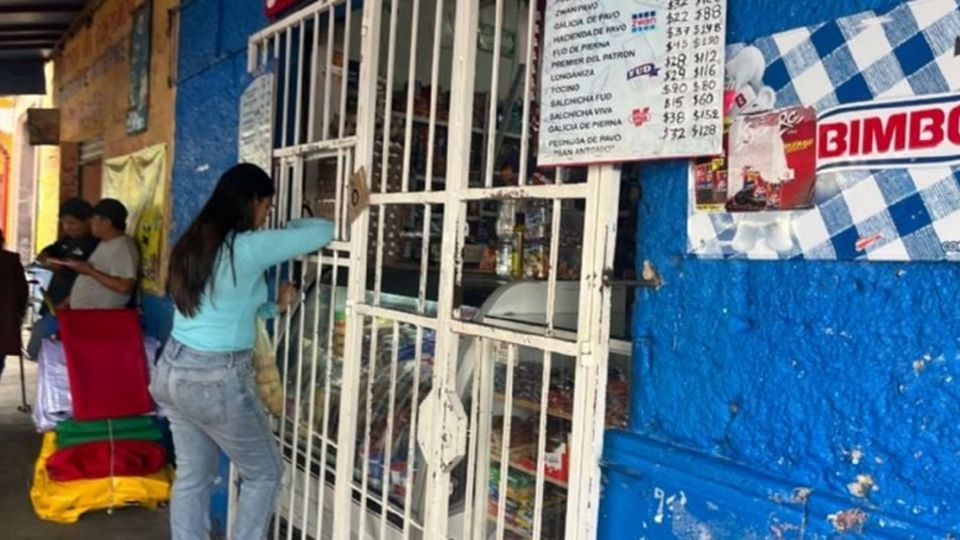

A few weeks ago, Maricela received a call from an unknown number. The voice on the other end claimed to be from a criminal organization and told her that if she didn’t pay a weekly “fee,” there would be consequences for her and her business.
Extortion, known locally as “cobro de piso” (floor tax), is a harsh reality for small business owners and street vendors across Mexico. According to Cuauhtémoc Rivera, president of the National Association of Small Merchants (ANPEC), the fee usually ranges from 500 to 1,000 pesos per week
La Silla Rota interviewed various merchants in the downtown area of Mexico City to learn about their daily struggles.
Te podría interesar
“I Work for Myself, Not for Them”
Among those interviewed was Maricela, who inherited her family’s business. She was unlucky enough to be threatened by phone. The caller demanded payment and mentioned the names of her children and grandchildren to intimidate her.
Then there’s Mariano, a long-time vendor who has worked in the area for decades. Unlike others, he has always refused to pay any extortionists.
“I work for myself, not for others who just show up with their hand out,” he says.
He recalls that about six or seven years ago, men on motorcycles began showing up, claiming to be part of “La Unión” and “La Familia”—criminal groups known in the area. Each time, the men were different. They asked for a protection fee to keep his business and himself “safe.”
“They had studied you well,” he said. “They knew your name, what time you arrived, what time you left, and who you talked to.”
Mariano never gave in. Instead, he made a scene, yelling at them until they left. “If you make noise, they leave on their own,” he says.
He hasn’t received a visit from extortionists in the last two years and has never been harmed.
Still, many of his neighboring vendors have chosen to pay, either to supposed government figures for police protection or directly to criminals out of fear.
Long before the threatening calls, Maricela had been assaulted at her stand. Since then, fear has lingered.
“After that, something ugly stays with you... and the calls just made it worse,” she says, nervously rubbing her hands.
She answered the first call thinking it might be a customer or family member.
“I picked up and he said he was one of them. He told me my name, my son’s name, and said he knew my grandkids came in the afternoon. I didn’t know what to say,” she recounts.
She received another call afterward, but over a month has passed and she hasn't heard from them since. When she shared the story with others, many simply told her that it’s normal and, if she wasn’t going to pay, to “be careful.”
The Butcher Who Backed Down
Mariano mentioned that some vendors have left entirely. One of them was a butcher who tried to go to the police
“He reported them. Said they were coming around and extorting him,” Mariano says.
Authorities arrested four men who were allegedly responsible, but a few days later, the butcher stopped coming to work. He told fellow merchants he didn’t want to put himself or his family at risk.
“He was afraid they’d kill him or someone in his family,” Mariano concluded.
Fear Keeps Victims Quiet
Cuauhtémoc Rivera of ANPEC says this type of fear is typical.
“Most people don’t report it out of fear. You could say that’s the majority. And some even come to believe it’s better to ally with the enemy than to fight them. Some start defending them and become their hostages,” Rivera says.
The Extortion Crisis in Mexico
From January to June 2025, 5,530 cases of extortion were reported in Mexico—an increase of 7.39% compared to the same period in 2024, according to data from the Executive Secretariat of the National Public Security System.
However, the figures do not distinguish how many of these cases involved businesses.
Here are the states with the most reported cases:
- State of Mexico: 1,398
- Guanajuato: 684
- Mexico City: 643
- Nuevo León: 480
- Veracruz: 454
A New Law on the Horizon
In response to the crisis, Mexico’s Chamber of Deputies announced that the Committee on Constitutional Affairs received a presidential initiative on July 10 aimed at addressing extortion.
The proposal includes:
Making extortion a crime prosecuted ex officio (meaning authorities can act even if no formal complaint is filed).
Creating a unified legal definition of extortion.
Adding aggravating circumstances and related crimes.
Establishing nationwide mechanisms for prevention, attention, and victim compensation.
Why It Matters
Extortion is one of the most corrosive and normalized crimes in Mexico’s everyday life. As Cuauhtémoc Rivera explains, it affects more than just a merchant’s finances—it damages their community, their peace of mind, and their future.
It functions like a “criminal tax” determined by how successful a business is: the more it earns, the more it’s expected to pay for “protection.”
The crime disproportionately affects small neighborhood businesses like butcher shops, fruit vendors, corner stores, and hardware shops—especially in states such as the State of Mexico, Guerrero, Michoacán, and Morelos, where criminal gangs operate with detailed knowledge of their victims and, in some cases, alleged collusion with local authorities.
In the worst cases, extortion leads to business closures, shorter operating hours, widespread fear, and the breakdown of the community.
Rivera emphasizes that community organization, visibility of the issue, and the creation of merchant support networks are crucial first steps toward addressing the problem.
ÚNETE A NUESTRO CANAL DE WHATSAPP. EL PODER DE LA INFORMACIÓN EN LA PALMA DE TU MANO