






The Mexico City government has disclosed only partial information about expenditures for public transportation upgrades and other World Cup-related infrastructure projects, to which it has allocated at least 28 billion pesos.
While the Brugada administration launched a dedicated transparency portal for World Cup projects, the website merely lists the concept, amount, and funding source for each project, omitting details such as the company involved, the relevant contract, copies of contractual documents, and the procurement method used, whether through a public tender, invitation to at least three companies, or direct award.
Transparency specialists warned that without access to contracts, construction timelines, or the names of the companies involved, the initiative amounts to little more than a simulation of transparency.
Te podría interesar
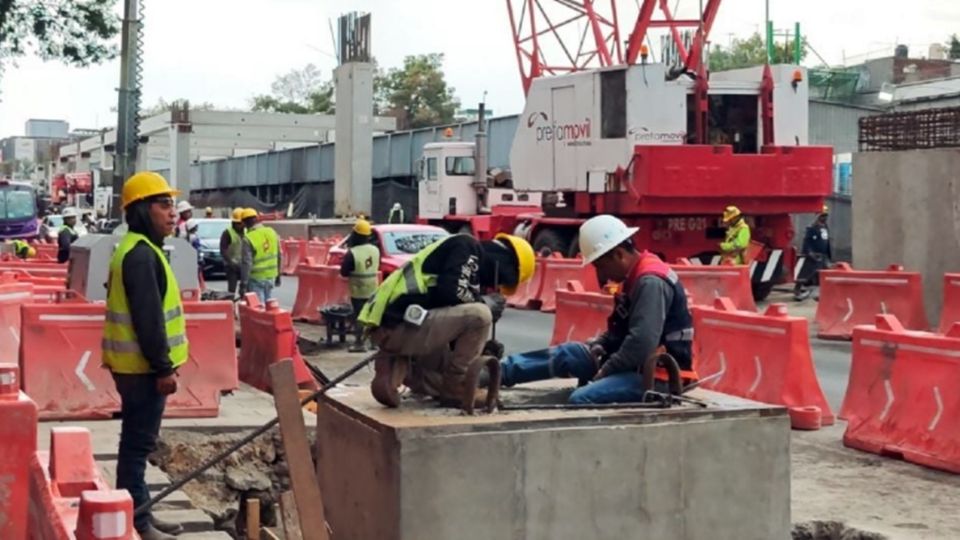
The projects include the renovation of a section of Metro Line 2 and the Light Rail system, which serve as the primary transportation route to Azteca Stadium, as well as the construction of the elevated pedestrian and cycling pathway over Tlalpan Avenue known as the “floating causeway.”
Additional investments have been made in water and drainage infrastructure to prepare for the rainy season, upgrades to public lighting, modernization of “Utopías” community facilities, and improvements to other public spaces in the Santa Úrsula neighborhood and surrounding areas.
ALSO READ: “La Tripa,” the Police Officer Turned Criminal Who Was an Ally of Cuauhtémoc Blanco
Funding has come from four sources: the Mexico City government budget (14.102 billion pesos), the Mixed Tourism Promotion Fund (4.353 billion pesos), the Infrastructure, Mobility, Water and Security Trust Fund (8.891 billion pesos), and the National Infrastructure Fund (1.5 billion pesos).
Experts See a Simulation of Transparency
Vania Pérez Morales, former president of Mexico’s National Anticorruption System, said the situation undermines the public’s right to information and accountability for an event of the World Cup’s scale.
She emphasized that access to information goes beyond merely reporting that a project exists; authorities must also disclose how funds were spent, which companies received the contracts, under what procurement method, and over what time period.
Pérez Morales noted that following the elimination of transparency oversight bodies through the constitutional reform that dissolved the National Institute for Transparency (INAI) and its state-level counterparts, citizens now lack an independent mechanism to obtain such information if government agencies refuse to provide it.
“It’s a simulation. Now that InfoCDMX has stopped operating, who can you complain to?” she asked.
Eduardo Bohórquez, executive director of Transparency International’s Mexican chapter, Transparencia Mexicana, said the existence of a dedicated transparency portal for World Cup expenditures and investments is a positive step. However, he argued that the way the information is presented falls far short of national and international transparency standards.
He stressed that neither project plans nor contracts have been made public, preventing citizens from knowing which companies benefited from these resources.
The website provides only spending figures and a photo gallery, making it impossible to assess the true scope of the projects.
As a result, Bohórquez warned that the public cannot effectively monitor contract compliance or verify whether projects are completed as agreed.
He also pointed out that the investments are classified as generating “permanent benefits,” yet the information available does not reveal whether the spending corresponds to previously planned projects or to additional investments tied specifically to the World Cup.
Furthermore, he argued that the platform is not accessible to everyone because it was not designed with cultural relevance in mind, limiting its usefulness for Indigenous communities and residents of highly marginalized areas of the city.
Purple Road Barriers Painted by Mistake
One of the projects involved renovating and repainting road signage on major thoroughfares. However, side barriers along sections of the Periférico Ring Road and Circuito Interior were mistakenly painted purple. The project carried a price tag of 84.1 million pesos.
The initiative, officially titled “road markings and signage on primary roadways,” was overseen by the Ministry of Mobility as part of the city’s World Cup preparations.
Last June, social media users highlighted that some barriers along Periférico and Circuito Interior had been painted purple, in violation of NOM-034-SCT2/SEDATU-2022, the federal standard governing road signage.
After the error was identified, the markings were repainted yellow, their previous color.
Road marking and channelization elements include cones, barriers, lights, and reflective markers used to define areas, guide traffic, warn drivers of obstacles, improve safety, and direct vehicle flow.
Background
Mayor Clara Brugada has defended the capital’s new visual identity, which has been characterized by the extensive use of purple paint on public infrastructure, particularly pedestrian bridges. Critics have argued that the administration is focusing on cosmetic changes rather than addressing underlying problems, contending that issues such as transportation, flooding, and deteriorating infrastructure are being covered up with paint rather than resolved. They have also criticized the government’s emphasis on painting axolotls, the species chosen as the city’s official mascot.
“If ‘axolotlizing’ means filling spaces that were once gray with color; building Utopías; creating murals; transforming public spaces; painting them with feminist purple; creating the Public Care System; investing in mobility and electric transportation; modernizing the Light Rail; and building cable car systems, then of course we are axolotlizing,” Brugada said.
Brugada later stated that the decision to paint the bridges was made by the contracted companies—whose identities remain undisclosed—and that those firms would be responsible for correcting the situation.
djh