





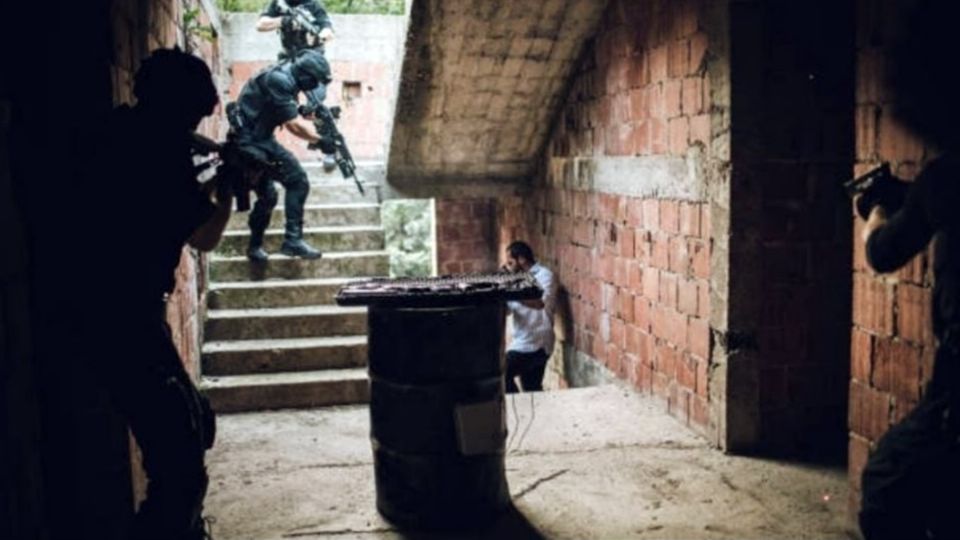

The Guatemalan government is working alongside the United States to shield its Army by raising the institution’s level of professionalism and preventing organized crime from infiltrating its forces, despite being “far removed” from the cartel crisis affecting neighboring Mexico.
In an interview with EFE, Guatemala’s Minister of National Defense, Henry Sáenz Ramos, discussed the Army’s internal transformation process, the key collaboration with the United States as an ally, and the country’s short-term goal of strengthening ties with European powers.
“The United States helps us verify through scientific testing whether officers, specialists, or troops have any ties to organized crime (...) This allows us to know that the units engaged in combating these threats are completely free of any connection to criminals,” the Guatemalan minister explained.
Te podría interesar
According to the minister, the strategic relationship with the United States is crucial to maintaining the integrity of the armed forces, particularly because Guatemala serves as a “mandatory transit route” for drug cartels moving narcotics toward the United States, one of the world’s largest consumers of illegal substances.
ALSO READ: With a Charro Arena and Stables, This Was the Ranch Where CJNG’s “El Jardinero” Was Hiding
Guatemala is primarily a strategic corridor for international cartels transporting drugs from South America to the United States. Authorities regularly carry out multimillion-dollar seizures and record-breaking cocaine confiscations, in addition to constant arrests and extraditions.
More than one hundred members of the military have been prosecuted or linked to criminal organizations over the past decades, according to judicial and police records — a problem that has also affected Guatemala’s justice system.
Although the Defense chief acknowledged the ongoing threat posed by Mexican cartels along the shared border — described as a rest and reorganization zone for transnational crime — he said Guatemala has not yet become a battleground for territorial disputes among those criminal groups.
“We have not yet had, territorially speaking, a cartel powerful enough to confront the Army or the police head-on, precisely because they do not view Guatemala as a territory for their operations, but rather as a place to rest. The threat remains present. However, we are still far removed from what is happening in Mexico,” the official concluded.
djh