





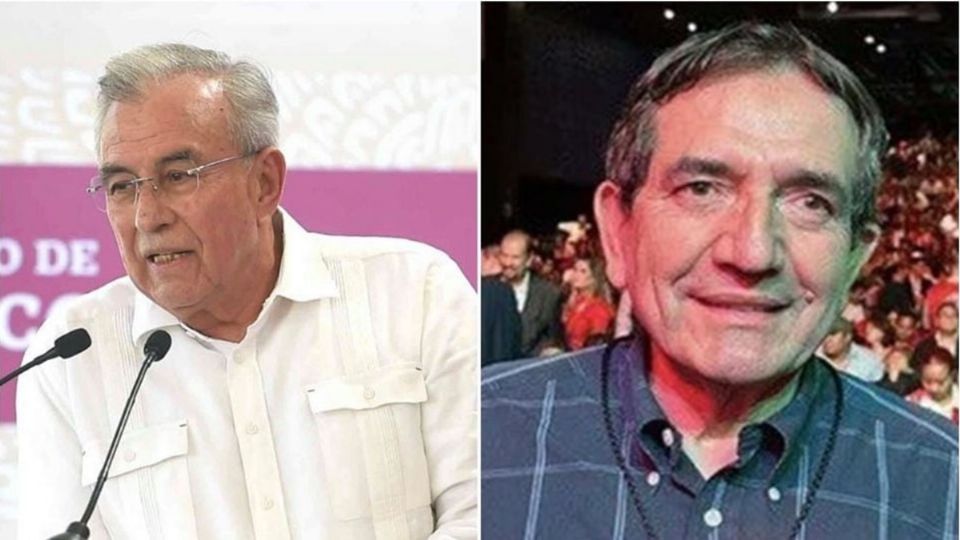

Mexico’s Attorney General’s Office (FGR) ruled out any connection between the murder of former Autonomous University of Sinaloa rector Héctor Melesio Cuén and the U.S. investigation targeting Sinaloa Governor on leave Rubén Rocha Moya.
The FGR clarified that the investigative lines being pursued by the Special Prosecutor’s Office for the Investigation and Litigation of Complex Cases, part of the Specialized Regional Control Prosecutor’s Office, are unrelated to the allegations tied to the indictment filed before the U.S. District Court for the Southern District of New York against 10 Mexican citizens.
“In this case, as in all others, the FGR is working to clarify the facts, identify the individuals responsible for participating in these acts, and ensure the crime does not go unpunished.”
Te podría interesar
ALSO READ: Young People Recruited from Northern Mexico for War Between “Mayiza” and “Chapitos”
FGR Reactivates Investigation Into Héctor Melesio Cuén Murder
On Tuesday, Mexico’s Attorney General’s Office reopened the investigation into the alleged intervention of the Sinaloa Cartel in the 2021 state election won by Rubén Rocha Moya, now governor on leave, while also reviewing the case file on the murder of Héctor Melesio Cuén Ojeda, former rector of the Autonomous University of Sinaloa.
According to national reports, federal prosecutors are compiling into a single case file several investigative lines involving allegations against current and former Sinaloa officials: the 2021 election, the kidnapping of Ismael “El Mayo” Zambada, the murder of Cuén Ojeda, and the accusations filed in the United States against Rocha Moya and nine other individuals.
So far, Rocha Moya has not been summoned to testify by the FGR, either regarding the U.S. accusations or the investigations related to the cases involving El Mayo Zambada and Héctor Melesio Cuén Ojeda, according to reports citing federal prosecutorial authorities.
The renewed momentum in the investigation comes after U.S. authorities requested that Mexico provisionally arrest Rocha Moya and nine other current and former Sinaloa officials for extradition purposes, alleging they protected operations run by Los Chapitos, the Sinaloa Cartel faction led by sons of Joaquín “El Chapo” Guzmán.
The U.S. indictment claims that the then-candidate received criminal support during the 2021 election and, in exchange, promised to place individuals close to the criminal group in positions of authority within the state government.
That account is part of the judicial case opened in a federal court in New York, but Mexican authorities have said the United States has not yet provided sufficient evidence to support a provisional arrest in Mexico.
Mexico’s Foreign Affairs Ministry said it received the provisional arrest requests but noted that the documents sent by the U.S. Embassy lacked sufficient evidence to establish the responsibility of the individuals being sought. The FGR later said it would request additional information before determining whether any action should proceed under Mexico’s legal system.
Rocha Moya has publicly denied the allegations. In a statement released by the Sinaloa state government, he said the accusations lack truth and foundation and maintained that he will prove the claims are baseless.
The Cuén Case and the Federal Version
The review of the murder of Héctor Melesio Cuén Ojeda is one of the most sensitive parts of the case file. The former UAS rector, former mayor of Culiacán, and congressman-elect was killed on July 25, 2024, the same day Ismael “El Mayo” Zambada was taken to the United States following an episode the cartel leader himself described as a kidnapping.
The first version released by state authorities claimed that Cuén Ojeda had been attacked during an attempted robbery at a gas station. However, the FGR detected inconsistencies in that line of investigation, including irregularities in forensic reports, questions surrounding the video released locally, and elements that were not properly documented in the autopsy.
Months later, federal authorities reported that blood evidence matching Cuén Ojeda was found at a property located in Huertos del Pedregal, in Culiacán. Based on that finding, the FGR argued that the former rector had been at the same location where El Mayo Zambada was allegedly kidnapped, and that his death occurred hours before the gas station video released by local authorities.
That federal line of investigation contradicted the initial version presented by the Sinaloa State Attorney General’s Office and raised questions about possible criminal or administrative liability involving prosecutorial, forensic, and police personnel who participated in the early stages of the case.
djh