





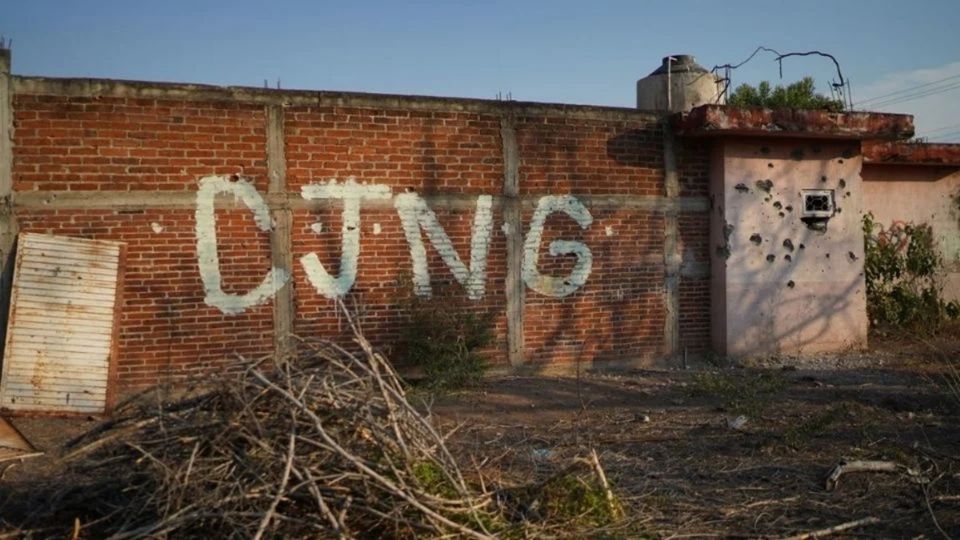

The Jalisco New Generation Cartel (CJNG) is the criminal organization with the highest number of accounts on the social media platform TikTok, according to an analysis by El Colegio de México (Colmex). Of all accounts that reference organized crime on the platform, 54.3% are linked to this group, and their content is strongly oriented toward recruitment, experts warn.
The percentage of accounts referencing another criminal network, the Sinaloa Cartel, stands at 5.4%, where content focuses on propaganda and the display of internal rivalries, according to the study.
According to the study “New Frontiers in Digital Recruitment” by El Colegio de México, this presence relies on specific tactics designed to build identity and attract new members.
Te podría interesar
Accounts associated with the CJNG are particularly active in posting false “job” offers that promise attractive salaries, housing, training, and tactical equipment to those who decide to join “the four letters.” The research indicates that within the analyzed sample, 47% of these accounts had explicit recruitment as their main function.
Alondra Reyna Rivera, researcher at the Seminar on Violence and Peace at Colmex, said in an interview with La Silla Rota that material circulating on social media or in video games is not always fully explicit, but instead conveys messages through videos that reflect admiration for criminal group dynamics.
Te podría interesar
“It is the most aspirational content seen in music, even in series. We are not saying all of this ends in recruitment, but it all contributes to building certain narratives and a degree of normalization,” she explained.
She added that this dynamic means recruitment no longer depends solely on the geographic areas where youth and children live, but can now occur across different locations.
“We have found evidence that perhaps a young person in the State of Mexico, through social media, ends up connecting or approaching criminal groups in Sinaloa or even outside Mexico,” Reyna Rivera said.
READ ALSO: Countries that are banning social media for minors
Reyna Rivera stressed that in these cases, guardians play an important role, and ongoing communication should exist regarding what minors watch, do, or listen to on these platforms.
“Bring these issues to the table, talk about consequences, and discuss what is happening,” she advised.
A central pillar of this strategy is the use of a distinct digital language. The CJNG uses hashtags such as #4letras, #mencho, #ElSeñorDeLosGallos, #nuevageneración, and #trabajoparalamaña, which allow the group to position its content and become easily searchable for users browsing the platform.
Musical connections
The research indicates that music plays a crucial role in building this identity. Videos shared by these accounts often feature narcocorridos and corridos tumbados by artists popular among young audiences, including Los Alegres del Barranco, Fuerza Regida, and Peso Pluma.
The study notes that this musical selection is not random, as it includes songs that directly reference the cartel or its leader, functioning as a soundtrack that normalizes and glorifies belonging to the group.
The specialist added that banning or restricting social media use may not succeed, and reaffirmed that guidance and supervision are more necessary in these situations.
She noted that this issue is not unique to Mexico. Around the world, cases have emerged in which terrorist groups in Europe or the Middle East seek to recruit young people to “join their ranks.”
Reyna Rivera stressed the importance of not revictimizing youth and children who become linked to criminal groups, since multiple factors may influence their involvement.
“We must recognize different types of recruitment; it may be coercive or not… we need to ask what is happening among young people that makes linking up with a criminal group seem like a viable alternative,” she emphasized.
She listed possible causes such as school dropout, job insecurity, search for identity or belonging, normalization of violence, poverty, or deteriorated family environments.
How to identify recruitment on social media?
“It is increasingly common to encounter this type of content on social media, and it is a risk we used to think was very hidden,” she stated.
Criminalizing recruitment
Given the reality that criminal groups recruit through social media, the Colmex researcher said it is necessary to legally define the crime of recruitment and regulate social media platforms.
“The government needs to criminalize it, needs to regulate big tech companies, and tech companies also need to assume responsibility,” she said.
READ ALSO: Emojis and hashtags: How do cartels recruit and promote themselves on social media?
The research highlights that other platforms such as Roblox, Facebook, and Instagram are also used. Researchers raise the possibility that this environment has become a channel to reach even younger audiences.
Mexico’s Secretariat of Security and Citizen Protection (SSPC) has identified a total of 39 accounts dedicated to recruitment across “different platforms” and social media networks.
VGB