





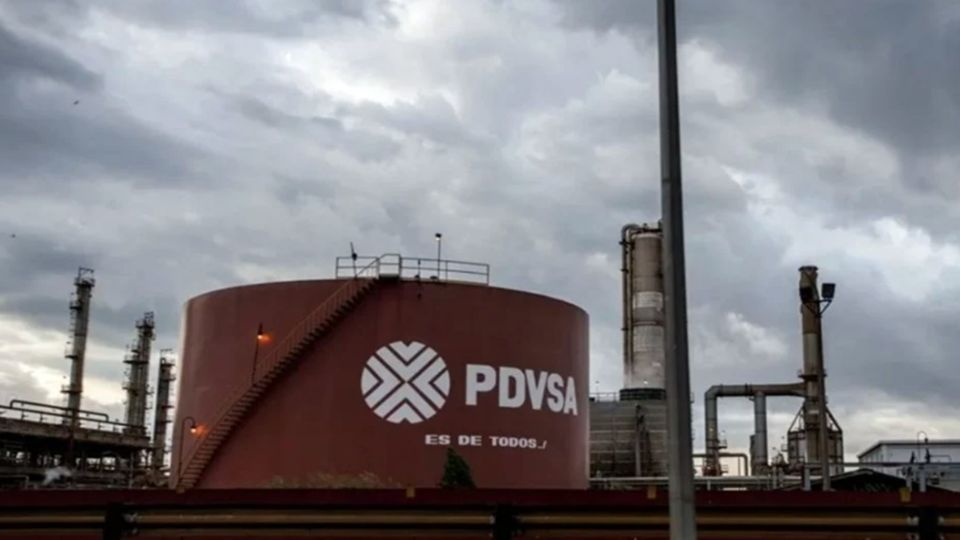

Venezuela’s National Assembly, controlled by the Chavista movement, approved this Thursday—after a second reading—the reform of the Organic Hydrocarbons Law proposed by acting president Delcy Rodríguez, aimed at encouraging private and foreign investment in the oil sector, at a time when the United States has Venezuela’s crude in its sights.
After nearly two hours of debate, the National Assembly (AN, Parliament) gave the green light to substantial amendments to the law, originally enacted in 2001 and reformed in 2006 at the initiative of then-president Hugo Chávez to increase state participation and control over oil activity.
The approved changes open space for private participation in primary activities (exploration, extraction, gathering, transportation, and storage) and for foreign investment, including the possibility that disputes may be resolved “through alternative dispute-resolution mechanisms, including mediation and arbitration.”
Te podría interesar
“It is hereby enacted for history, for the future, for our daughters and our sons, the Reform Law of the Organic Hydrocarbons Law, after an arduous nationwide consultation process, with more than 120 proposals received,” said the president of the National Assembly, Chavista Jorge Rodríguez.
According to the call, the session began at 1:00 p.m. local time (5:00 p.m. GMT), although it usually starts later than scheduled.
The second reading is the final stage for the approval of laws or reforms. It should be recalled that a few days ago Venezuela’s National Assembly, controlled by the Chavistas, approved in first reading the partial reform of the Organic Hydrocarbons Law.
During this session, lawmakers are expected to study the document article by article, presented in this case by the Energy and Petroleum Commission, after receiving proposals during the consultation phase with sectors linked to the area.
While the reform is expected to be approved this very Thursday, it is also possible that lawmakers may request to continue in a subsequent session, as has happened with other legislative initiatives.
The president of the Energy and Petroleum Commission, Orlando Camacho, said on Monday, during a meeting led by Delcy Rodríguez, that 80 proposals have been reviewed.
The meeting led by Rodríguez included representatives of oil companies, among them Spain’s Repsol, U.S.-based Chevron, and the UK’s Shell. At the meeting, the acting president said the reform will make it possible to “capture a significant flow of foreign and domestic investment” and turn Venezuela into a “giant producer.”
What is Venezuela’s oil reform about?
Delcy Rodríguez, who assumed the acting presidency after the capture of Nicolás Maduro along with his wife, Cilia Flores, on January 3 by the United States, has explained that the reform has among its main objectives:
Incorporating the model of so-called Productive Participation Contracts (CPP), created on the basis of the Anti-Blockade Law approved in 2020 to circumvent the economic sanctions imposed on the country.
Venezuela has signed 29 CPPs, including with Chevron. This type of agreement remains confidential under the protection of anti-blockade legislation and, according to the Chavista leader, has allowed the U.S. company to have “the highest production in the last 25 years” in the country.
The proposed reform contains 18 articles, and among its changes it provides that:
Primary activities may be carried out not only exclusively or predominantly by the State, but also by “privately domiciled companies” in the country, “within the framework of contracts signed with companies of exclusive ownership of the Republic or their subsidiaries,” according to the document shared with EFE by a lawmaker who requested anonymity.
It also adds a new article establishing that disputes that cannot be resolved amicably “may be decided by the competent courts of the Republic or through alternative dispute-resolution mechanisms, including mediation and independent arbitration.”
In 2025, crude production, which reached 1.081 million barrels per day (bpd), recorded five consecutive years of growth since 2021—when it had fallen to 636,000 bpd—and surpassed 2019 levels, which averaged 1.013 million bpd, according to official figures.
djh