



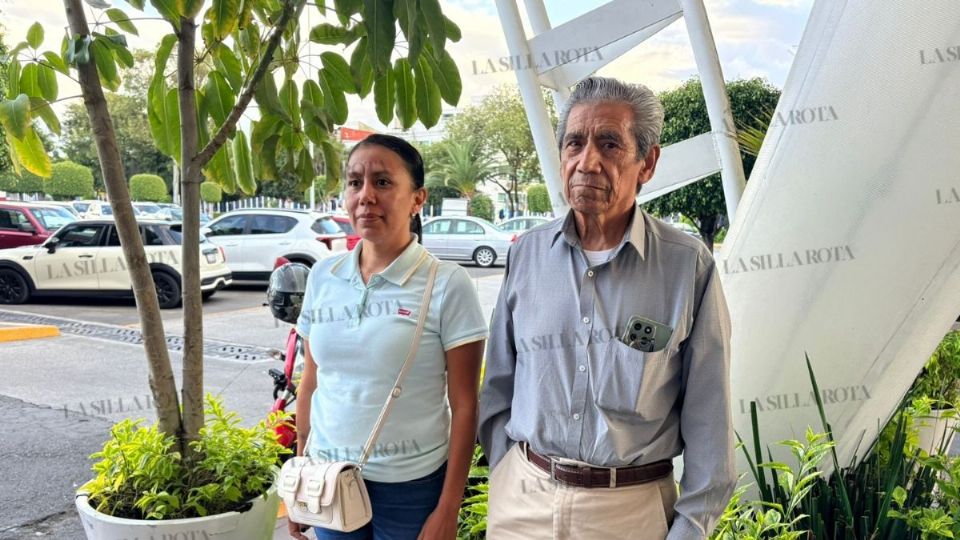

“It’s devastating — these are my life savings. And in just five or ten minutes, they tell you you have nothing left,” says Bernardino Ávila Hernández, an 80-year-old retiree who entrusted his money to the Popular Financial Society (Sofipo) Consejo de Asistencia al Microemprendedor (CAME).
That money — more than 2 million pesos — was the result of a lifetime of work. He had set it aside for medical care and assistance in old age.
“I was saving it for the time when I could no longer move. I told my wife we could use it to hire a nurse and not be a burden to our family. And now, after all this, I even feel like ending my life,” he confides in an interview with La Silla Rota.
Bernardino is one of 169,000 savers affected by what Mexico’s National Banking and Securities Commission (CNBV) has labeled the bankruptcy of CAME, one of the country’s largest Sofipos. But for the victims, this was not a bankruptcy — it was a fraud, they say — and they accuse financial authorities of silence and neglect.
“The CNBV Never Wanted to Receive Us”
According to the CNBV, 99.5% of CAME’s clients will receive compensation through the deposit insurance fund, which protects accounts up to 219,000 pesos. But Bernardino had more than 2.38 million pesos saved.
“The CNBV never wanted to meet with us. We sent a letter to the chairperson and got no reply. On September 19, they told us the insurance payment was ready — but 220,000 pesos for almost 2.5 million? It’s not fair,” he says.
CAME stopped submitting reports to regulators in January 2025. By March, it began closing branches without warning, leaving thousands of clients unable to access their money. Complaints had been filed for months, yet the CNBV did not act until June, when it declared CAME in liquidation.
Bernardino recalls the day he realized something was wrong:
“I went to pay my granddaughter’s tuition, and they told me the card had no funds. Then I tried at a store — same thing. I called the branch, but no one answered. They said the app was under maintenance. Weeks passed, and when we went to the office, the building was already for rent.”
A Struggle Marked by Silence
For Bernardino, the process has been emotionally exhausting. His health has declined since the ordeal began. His daughter, Edna Ávila, has become his spokesperson and one of the leading voices for victims seeking justice.
Edna says that at the end of April, she and a small group of savers went to CNBV headquarters to request immediate intervention. The agency’s head refused to meet with them. Instead, they were received by Armando Martínez Ramírez, Director General of Supervision of Popular Financial Societies, who told them “we don’t know anything.”
Later, they managed to open working groups with the Ministry of the Interior (Segob) and the Attorney General’s Office (FGR), where they submitted a restructuring proposal. Yet, none of the authorities accepted to review or consider it.
“This nightmare began on April 14. The president has mentioned our case twice in her morning press conferences, saying that Edgar Amador from the Finance Ministry and Rosa Icela Rodríguez from the Interior Ministry are handling it — but that’s a lie. Neither of them has ever met with us,” Edna says.
She also argues that the deposit insurance coverage does not compensate the financial, moral, or emotional damage suffered by the victims.
“My dad used to be a very healthy man. But ever since this happened, he’s been more withdrawn, he goes to the doctor more often, and he’s getting worse,” she laments.
Rising Concerns Over the Sofipo Sector
CAME’s collapse has exposed serious weaknesses in Mexico’s popular financial institutions and the regulatory failures that allowed the crisis to grow unchecked.
Carlos Marmolejo, Executive Director of the Sofipo Finsus, told La Silla Rota that while the CAME case has not yet contaminated the entire sector, the high delinquency rate across Sofipos is deeply concerning.
“Most Sofipos lend for consumption at very high interest rates. That’s not healthy — neither for the borrowers nor for the institutions. Even though those rates help them cover bad loans, they distort the market,” Marmolejo warned.
According to CNBV data, the average delinquency rate among Sofipos is 11%, the highest in Mexico’s financial system.
Marmolejo noted that Finsus maintains a delinquency rate of just 2%, but the broader model remains risky. “These institutions attract savers by offering double-digit interest rates — higher than the Bank of Mexico’s benchmark rate — but that also means higher risk.”
For that reason, Edna Ávila issued a blunt warning:
“Don’t put your money in any Sofipo. It’s proven that every year one or two of them go bankrupt — and people lose their money.”